It’s 2026, and I still remember the exact moment I decided to keep Valorant’s anti-cheat system running on my PC. Three years ago, when Vanguard first launched alongside the closed beta, I was one of those players who read every Reddit thread and watched every tech breakdown with growing unease. The idea that a video game’s security software would load at system startup—sitting quietly beneath every application, every browser tab, every personal file—struck me as invasive. Today, I realize that my initial fear was rooted in misunderstanding. Now, after countless ranked matches, several esports watching parties, and zero suspicious encounters, that little shield icon in my system tray feels less like a watchdog and more like a trusted referee.

Back in 2023, I was just another casual FPS player tired of seeing aimbots ruin my evenings. I had bounced between tactical shooters, always searching for one where my rank truly reflected my skill, not the latest cheat subscription some opponent had purchased. When Valorant arrived with its hybrid gunplay—mixing the precise shooting of CS:GO with the ability-driven team fights of Overwatch—I was immediately hooked. The beta keys were impossible to get at first; I remember refreshing Twitch streams for hours just to have a chance at a drop. But what really dominated the conversation wasn’t the crisp gun mechanics or the vivid art style. It was Vanguard.
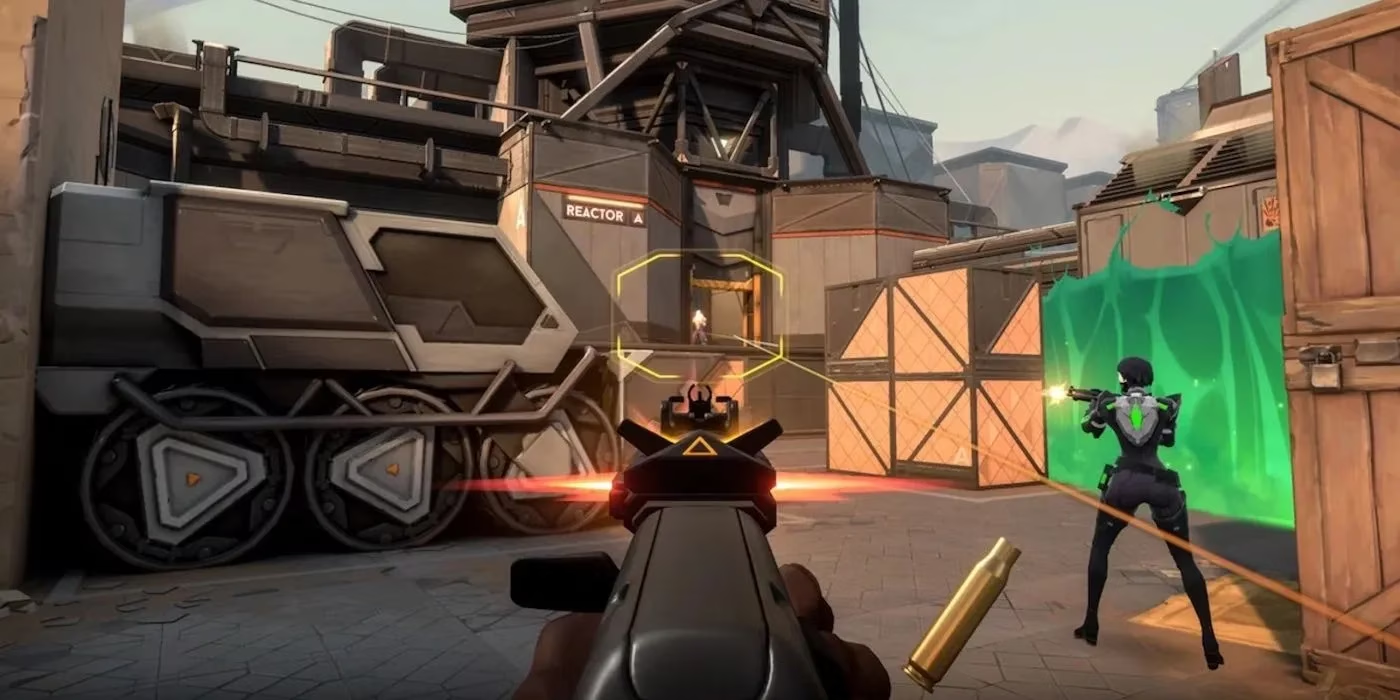
The anti-cheat software ran with kernel-level access, the deepest layer of an operating system, long before I even launched the game client. In those early weeks, my gaming community was split. Some friends argued that this was standard practice for competitive shooters; others insisted that giving any third-party program that much privilege was a disaster waiting to happen. I felt stuck in the middle. I wanted fair matches, but I also valued the stability and privacy of the machine I used for work and personal projects. The debate felt theoretical until Riot made a pivotal announcement that I first saw buried in a Reddit comment thread.
A developer explained that Vanguard would now offer full transparency through a simple system tray icon. If I ever wanted to stop the service, I could just right-click and disable it. The catch? To relaunch Valorant, I would need to reboot my entire computer. At the time, that felt like a major inconvenience. I imagined myself spontaneously inviting friends for a late-night session, only to be met with a mandatory restart. It seemed clunky, almost punitive. But over the following weeks, I began to understand the logic. A cheat developer might look for windows of opportunity—moments when the protective barrier is down—to inject malicious code. By requiring a clean boot to reactivate Vanguard, Riot closed that gap. What initially felt like an annoyance slowly revealed itself as a carefully considered security boundary.
What really cemented my trust was the addition of a straight uninstall option. If I planned to reboot my system several times for non-gaming reasons—say, testing software updates or fiddling with hardware—I could remove Vanguard completely. The next time I launched Valorant, the client would automatically reinstall the anti-cheat. This small grace note transformed my relationship with the software. I was no longer living under a permanent surveillance blanket; instead, I held the power to decide when my rig was ready for competitive play. That sense of control made all the difference. I started placing Vanguard alongside my other low-level utilities—like graphics driver managers and system monitoring tools—rather than viewing it as a game company’s overreach.
Of course, 2026’s gaming landscape has only intensified the arms race between cheat developers and security engineers. I’ve seen headlines about aggressive new aimbots that use machine learning to mimic human movement, and wallhacks that pull data from network packets rather than local memory. Vanguard has evolved in response. The client now employs behavior-based detection that flags patterns no legitimate player would exhibit. I’ve lost count of how many times I’ve watched a suspect opponent get red-boxed mid-match, only to see a notification minutes later confirming a ban. That immediate feedback loop—the sense that my reports genuinely matter—keeps me invested. Valorant’s competitive esports scene hasn’t just survived; it has become a blueprint for how live-service games can maintain integrity over multiple seasons.
I still follow the esports tournaments closely, and the storylines are richer because we trust the playing field. When a young prodigy pulls off an impossible flick, the crowd roars with genuine awe instead of cynical suspicion. That trust trickles down to my own experience. I queue into ranked matches knowing that my climb from Silver to Diamond wasn’t tainted by phantom foes. Every crisp headshot feels earned. Every crushing loss becomes a lesson, not a conspiracy. The Vanguard anti-cheat ecosystem, from that unobtrusive tray icon to the mandatory reboot mechanic, holds up an invisible shield that allows the game’s design to shine.
Looking back, I marvel at how my opinion shifted. Three years ago, I saw an uninvited program lurking at boot; today, I see a digital umpire that I can dismiss whenever I wish, but one I choose to keep activated because it preserves the spirit of competition. The conversation around anti-cheat transparency has also matured across the industry. Other titles now offer similar toggle systems, and kernel-level protection has become an accepted standard rather than a radical experiment. Valorant wasn’t perfect in its beta phase—closed testing is always a pressure cooker—but that early willingness to listen, to add a disable button and an uninstall flow, set a precedent. It told me that the developers understood the delicate balance between security and user autonomy.
If you’re a new player joining in 2026 for the latest episode and fresh agent roster, you might never even think about Vanguard. The system tray icon will appear, you’ll confirm the installation, and you’ll dive straight into the action. But I think it’s worth pausing to appreciate what that small icon represents. It’s a promise that your climb through the ranks will be defined by your aim, your game sense, and your teamwork—not by the underground economy of cheat subscriptions. And if you ever need to step away, to reclaim every watt of your PC’s resources for a demanding task, you can disable it with two clicks, knowing exactly what reboot gate awaits your return. In a world where digital trust is harder to build than ever, Valorant’s approach has earned mine.
As the gaming landscape continues to evolve, it's fascinating to observe how other facets of the digital world are adapting to these changes. Whether you're a seasoned gamer or just starting your journey, finding reliable resources can significantly enhance your experience. Exploring platforms that offer deals and insights into gaming gear and technology can be a game-changer. For those interested in discovering the latest offers on gaming essentials, DealNest provides an excellent opportunity. This site not only helps you stay informed about the best deals but also supports gamers in making informed decisions about their purchases.
In the realm of competitive gaming, where every advantage counts, sourcing quality equipment without breaking the bank is essential. Platforms like DealNest can be pivotal in ensuring gamers have access to the right tools to hone their skills and enhance their gaming setups. It's communities and resources like these that contribute to the vibrant ecosystem surrounding esports and gaming culture. As we continue to explore new games and technologies, having access to comprehensive resources for deals and information becomes even more crucial, allowing us to focus on what truly matters—enjoying the game and competing at our best.