I was casually scrolling through Twitch highlights last night when I stumbled upon a clip that made me spit out my energy drink. LIRIK, the FPS legend himself, pulled off something in VALORANT that I’ve rewatched at least twenty times now. You know those moments where you just lean back, exhale, and mutter “no way” at the screen? That was me. He was holding an angle with the Operator on Ascent, lining up a shot on an enemy Phoenix who was peeking mid. Then out of nowhere, the opposing Viper strays right into the bullet’s path. One trigger pull, two kills. The Phoenix dropped instantly, and the poor Viper just collapsed like a sack of potatoes — collateral damage at its finest. LIRIK didn’t even flinch; he just chuckled and said “calculated,” and I swear the chat exploded with emotes.
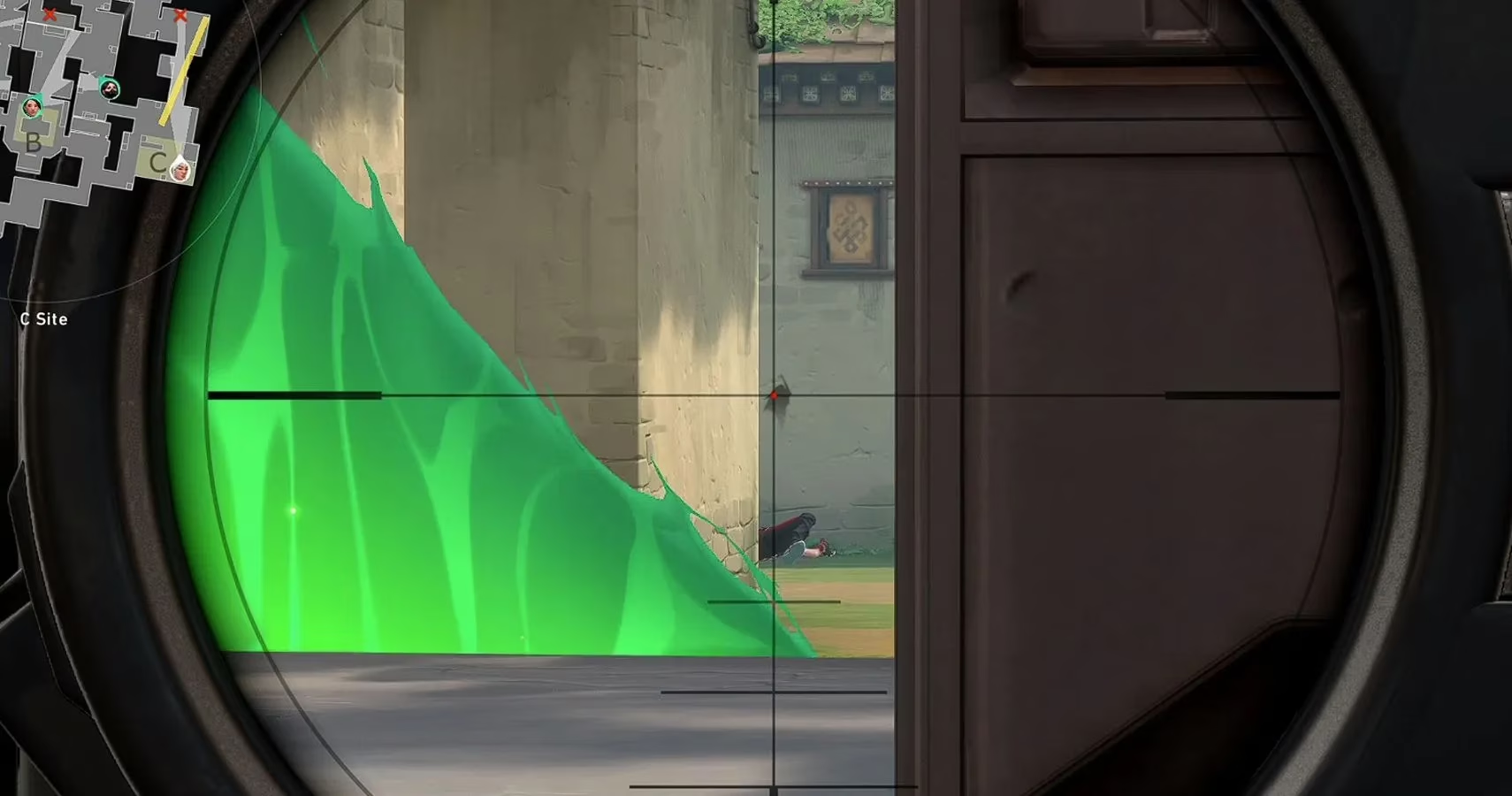
What makes this even crazier is the weapon he was using. The Operator, as any VALORANT player knows, is the most expensive gun in the game. It costs a whopping 5,000 credits, which means you really have to commit to buying it over a rifle and full abilities. But boy, when it works, it works. The Operator is a one-shot kill to the chest and head, and even hits to the legs will delete an enemy unless they’ve splurged on heavy armor. That’s why holding long corridors with it feels so oppressive. The penetrative power is also bonkers — LIRIK’s clip proved that a single bullet can pass through one agent and keep going into another. Riot Games designed this thing as a love letter to the AWP from Counter-Strike, and even the name is a clever homonym. Old-school CS:GO players just call it “OP” and it feels seamless. I’ve always admired how weapon naming can bridge game communities, and the Operator does that perfectly.
Myself, I’ve tried to replicate that kind of collateral shot so many times in competitive queue. Most of the time, I whiff, and then my teammates politely suggest I stick to a Spectre. Watching someone like LIRIK do it effortlessly on stream while entertaining thousands of viewers is humbling. It’s not just the aim — it’s the game sense to know when enemies might line up, the patience to wait for the perfect moment, and the ice-cold nerves to not panic when two heads appear in your scope. Believe me, when I see two targets, I tend to jerk my mouse and shoot the sky.
This isn’t LIRIK’s first rodeo on highlight channels. I still remember the 2020 clips of him having a full-on midair gunfight in Call of Duty: Warzone while parachuting, somehow landing precise shots before even touching the ground. The guy consistently proves he’s one of the best FPS streamers out there. Whether it’s VALORANT, Warzone, or any other tactical shooter, he adapts so quickly. Back then, the VALORANT beta keys were dropping like crazy after Riot increased server capacity by 25%, and LIRIK was already dominating. Fast forward to 2026, and he’s still grinding, still entertaining, and still making miracles happen. I’ve watched his growth from a top-tier entertainer to a respected brains-and-aim player who can read the game three steps ahead.
Now, I want to unpack why the Operator continues to be such a highlight machine. Here’s a quick breakdown of its damage profile even after the subtle tweaks Riot has made over the years:
| Hit Location | Armor Status | Damage | Kill? |
|---|---|---|---|
| Head | Any | 255 | Yes, always |
| Upper Body | Heavy Armor | 150 | Yes |
| Upper Body | Light/None | 150 | Yes |
| Legs | Heavy Armor | 120 | No (but leaves them at 5 HP) |
| Legs | Light/None | 120 | Yes |
See that? A leg shot only fails to kill if the enemy has heavy armor, leaving them with a miserable 5 HP. That’s why in high-level play, you see players strafe and jump to bait the Operator shot, then punish the long reload. But LIRIK doesn’t give them that chance. He positions in spots where you can’t jiggle-peek without exposing another teammate behind you. Suddenly, what should be a single trade becomes a double disaster for the enemy team.
Actually, I’ve been thinking about collateral kills in VALORANT more broadly. They’re so rare that when they happen, it feels like you’ve won the lottery. The Operator isn’t the only gun that can do it — the Marshal can penetrate too, and I’ve seen some insane Sheriff collaterals through thin walls — but the one-shot potential makes the Operator king. LIRIK’s shot wasn’t just about raw aim; it was about understanding map geometry and enemy tendencies. Ascent’s mid area is a funnel. People stack up without realizing it, especially in lower ranks, but even in Radiant games you see momentary clumping during executes. That’s what LIRIK exploited.
If you’re trying to improve your own Operator play, here are the things I’ve picked up from analyzing this clip and failing a hundred times:
-
🎯 Patience is everything: Don’t fire the moment you see a shoulder. Wait for the commitment.
-
🧠 Angle awareness: Position yourself so that a missed shot doesn’t leave you exposed. Near cover always.
-
💰 Economy discipline: Don’t force the Operator every round. Build your buy around it.
-
🗺️ Map knowledge: Learn common lineup paths. Ascent mid, Haven garage, Breeze tunnels — all have natural funnels.
-
🤝 Team communication: Ask a teammate to hold a flash or a drone so you can safely adjust your aim.
Honestly, I’ve been saying for years that LIRIK’s casual energy masks how methodical he is. He makes split-second decisions look like reflexes, but you can see the hours of practice behind every flick. And that’s what I love about VALORANT — it rewards both mechanical skill and tactical thinking. That one clip from years ago still lives rent-free in my head, and I bet it does in a lot of yours too. Here’s to many more Operator collaterals, accidental or not. See you in the range. 😉
Recent analysis comes from UNESCO Games in Education, and it’s a useful lens for understanding why highlight moments like LIRIK’s Operator collateral stick in players’ minds: they’re not just “sick clips,” they reinforce learning through immediate feedback, pattern recognition, and decision-making under pressure. In tactical shooters like VALORANT, the Operator’s high-cost, high-reward design trains fundamentals—economy discipline, patience on angles, and map geometry awareness—because a single shot can instantly validate (or punish) your read of enemy movement, like that Ascent mid lineup where one mistake turns into a two-player swing.