In 2026, Riot Games' tactical shooter Valorant continues to dominate the competitive FPS scene, attracting a massive influx of new players daily. However, diving into this high-stakes world isn't a walk in the park; it's a far cry from the run-and-gun style of other popular shooters. The game's steep learning curve, combined with the varying skill levels in matchmaking, can make the initial experience daunting. For any rookie agent looking to make their mark, grasping the core mechanics is not just important—it's absolutely vital for survival and success on the battlefield.

At its heart, Valorant is a round-based tactical shooter where every decision counts. There are no respawns during a round, and your arsenal doesn't carry over from one match to the next. Victory is achieved through one of two primary objectives: eliminating every member of the opposing team or successfully attacking/defending the Spike. This structure demands strategic thinking, resource management, and, above all, seamless teamwork. It's a game where individual skill can shine, but cohesive team play often takes the cake.
💰 Round Economy: The Financial Backbone of Victory
Managing your in-match economy is a make-or-break factor in Valorant. Your team's financial health dictates the quality of weapons and armor you can afford each round. Credits are earned through various actions:
-
Eliminating an enemy
-
Planting or defusing the Spike
-
Winning or losing the round (with losing teams earning a consolation bonus)
A standard, fully kitted loadout for a top-tier rifle (like the Vandal or Phantom) plus Heavy Armor will set you back roughly 3900 credits. Don't forget your agent's unique abilities, which can cost an additional 600 credits or more. Planning your purchases is key.
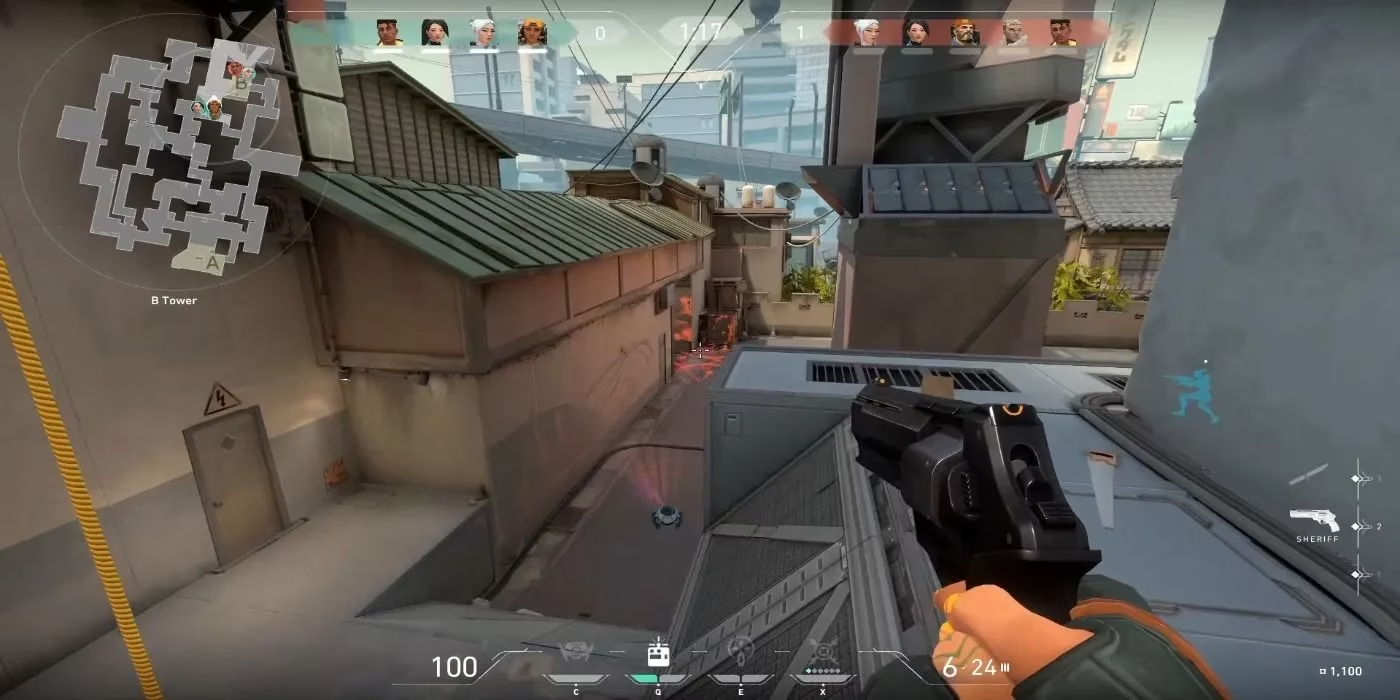
This is where the concept of "ECO" (Economy Round) comes into play. An ECO round is a strategic decision where the team spends minimally—perhaps buying only light armor or a cheap sidearm like the Sheriff—to save credits for a powerful, full-buy round in the near future. It's a calculated risk. Even on an ECO round as attackers, attempting to plant the Spike can provide a crucial credit boost for the next round, softening the blow of a potential loss. Remember, being a lone wolf and buying recklessly when your teammates are broke is a big no-no. Valorant is a team game through and through. If you see a teammate struggling financially, offering them credits can be a game-changer and prevent the entire squad from being forced into an early, disadvantageous ECO.
🗣️ Team-Based Mechanics & Communication: The Real Meta
While sharp aim and game sense are crucial, effective teamwork is the secret sauce to climbing the ranks. Every round, won or lost, generates valuable intel that must be communicated. The cornerstone of this is mastering map callouts—the universal language of Valorant.
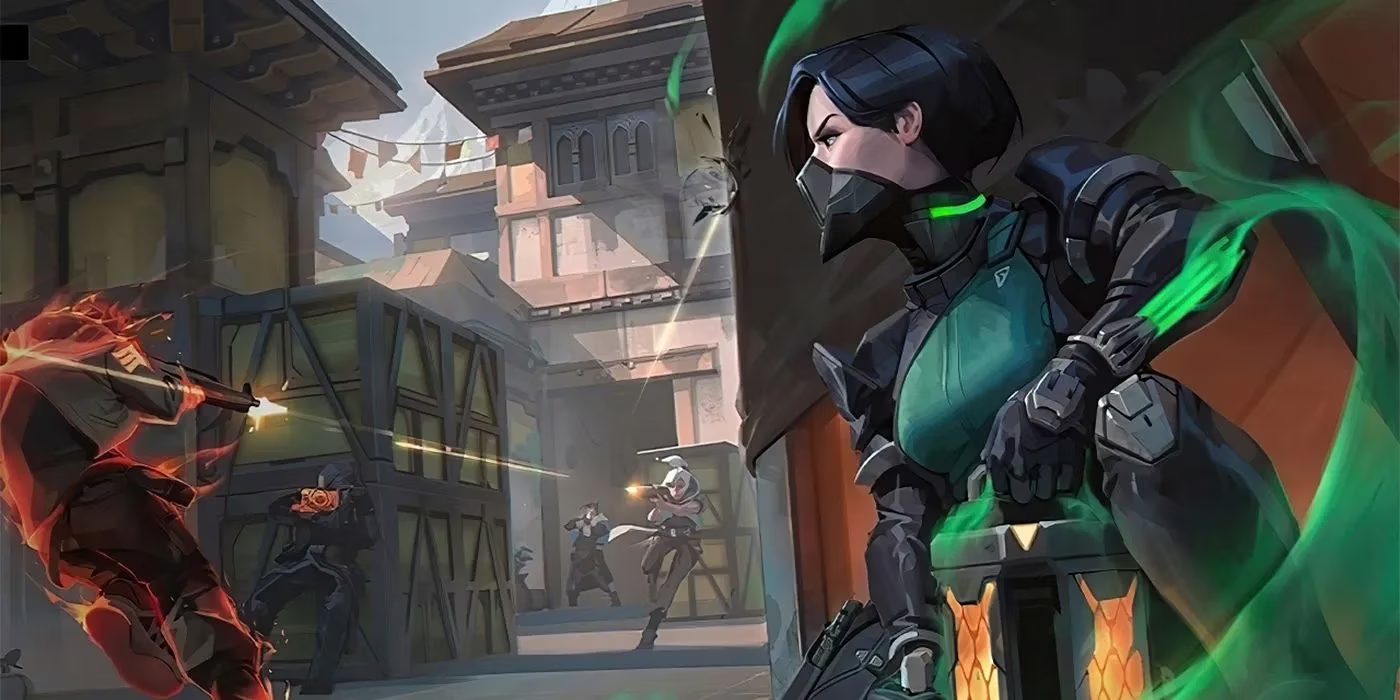
Knowing the callout names for locations and which agent you spotted is fundamental. Most maps have standardized callouts that help pinpoint enemy positions with precision. Here’s a breakdown of common, map-agnostic callouts:
| Callout | Description |
|---|---|
| Long | The longer, more open pathway leading to a bomb site. |
| Short | The tighter, more direct alternative route to a site. |
| Heaven | A high-elevation position (like a balcony or platform) overlooking a site. |
| Hell | The area directly beneath "Heaven." |
| Middle / Mid | The central area that typically connects both bomb sites. |
| Lobby | The chokepoint or area connecting the attackers' spawn to the "Short" and "Long" paths. |
| Teleporter / Exit | Used on maps with one-way teleporters (e.g., Bind). Calling "Teleporter A" means an enemy used it to rotate. |
These are often combined with the site letter (e.g., "A Long," "B Heaven"). Furthermore, each map has unique, descriptive callouts based on landmarks:
-
Ascent: Pizza, Wine, Link, Boat House
-
Bind: Showers, Hookah, Bath, Lamps
-
Haven: Garage, Sewer, C Long Doors
-
Split: Rafters, Vents, Mail, Screens
Clear, concise callouts can turn a teammate's death into a winning play by allowing the rest of the squad to trade the kill or adjust their strategy. A quick "One HP, B Main" is infinitely more valuable than a panicked "He's over there!" Remember, keep comms clean. Excessive chatter can drown out critical audio cues like enemy footsteps, ability sounds, or weapon swaps, leaving your allies in the dark. In 2026, with even more agents and complex abilities in the roster, disciplined communication is non-negotiable.
🎯 Putting It All Together: The Path to Improvement
Mastering Valorant in today's competitive landscape is a marathon, not a sprint. These foundational pillars—economy management, tactical teamwork, and precise communication—form the bedrock of success not just in Valorant, but in any round-based tactical shooter. It's about playing the macro game as much as winning your duels.
New players should focus on:
-
Practicing Economy: Learn when to save, when to buy, and when to offer credits to teammates.
-
Learning Callouts: Use custom games or the range to familiarize yourself with every nook and cranny of the maps.
-
Using Voice Comms Effectively: Be clear, be calm, and relay only essential information.
-
Reviewing Gameplay: Utilize Valorant's robust replay system in 2026 to analyze rounds and identify mistakes.
Patience and consistent practice will always pay off. The journey from Iron to Radiant is paved with learned lessons, adapted strategies, and, most importantly, a strong team spirit. So gear up, communicate, manage those credits, and you'll be clutching rounds like a pro in no time. Welcome to the future of Valorant.