Hey there, fellow agents! As a seasoned player who's spent countless hours holding the line, I know that playing defense in Valorant can sometimes feel like you're trying to stop a tidal wave with a paper cup. The pressure is immense, the decisions are split-second, and one wrong move can cost your team the round. But over the years, I've learned that defense isn't just about stopping a plant; it's a complex, cerebral game of chess. Let me share the core philosophies and actionable strategies that have transformed my defensive gameplay and can do the same for yours.
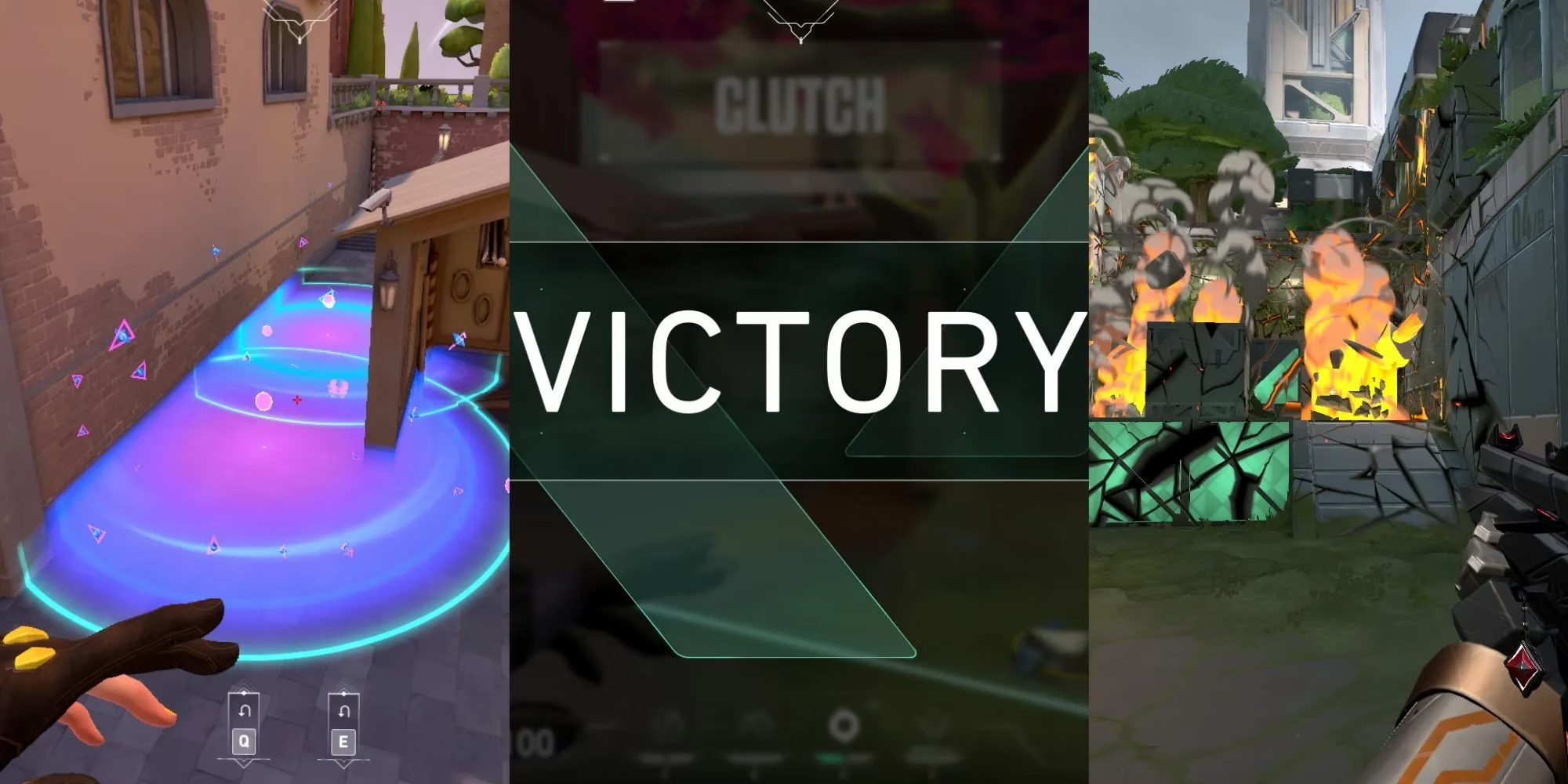
One of the biggest traps defenders fall into, myself included in my early days, is the panic rotation. You hear a single footstep or see a Sova dart at the other site, and suddenly your entire team is scrambling across the map. This is a recipe for disaster. Attackers feast on over-rotations. A smart opposing team will execute a fake push precisely to create this chaos, leaving the actual target site wide open for a free plant. My golden rule? Anchor until you're certain. This means holding your position firmly until there's undeniable proof—like multiple contacts, utility usage, or the spike being spotted—that the enemy is fully committing to a different site. Sentinels like Killjoy or Cypher are masters of this, using their kits to hold down a site almost single-handedly, allowing the rest of the team to play more flexibly.
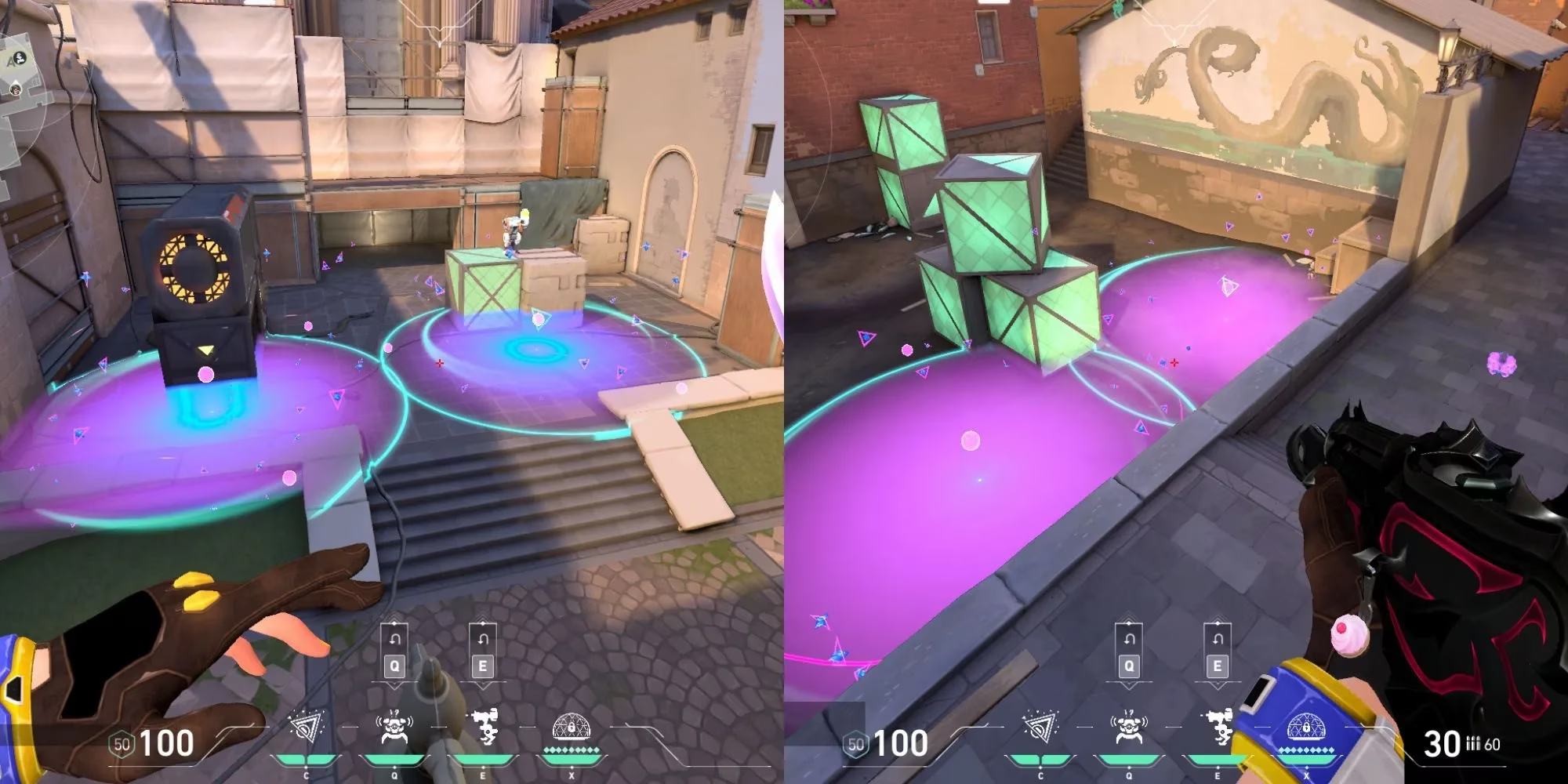
Preparation is half the battle won. Before the first round even starts, I make it a habit to analyze the enemy team composition. This isn't just about knowing their names; it's about predicting their strategy. If they have a Sova, I'm mentally preparing to shoot his Recon Darts. A team with Skye or Phoenix? I'm practicing my anti-flash turns and communicating with my team about potential flash plays. This pre-round analysis extends to the economy. I'm constantly checking the tab screen to answer key questions:
-
Is the enemy on a save round, or are they fully bought?
-
Who has their ultimate ready? (Especially game-changers like Killjoy's Lockdown, Raze's Showstopper, or Breach's Rolling Thunder)
-
What's our team's economic and ultimate status?
This knowledge directly dictates how I'll play the round—aggressively taking space if they're on a save, or playing more cautiously and for picks if they're fully powered.
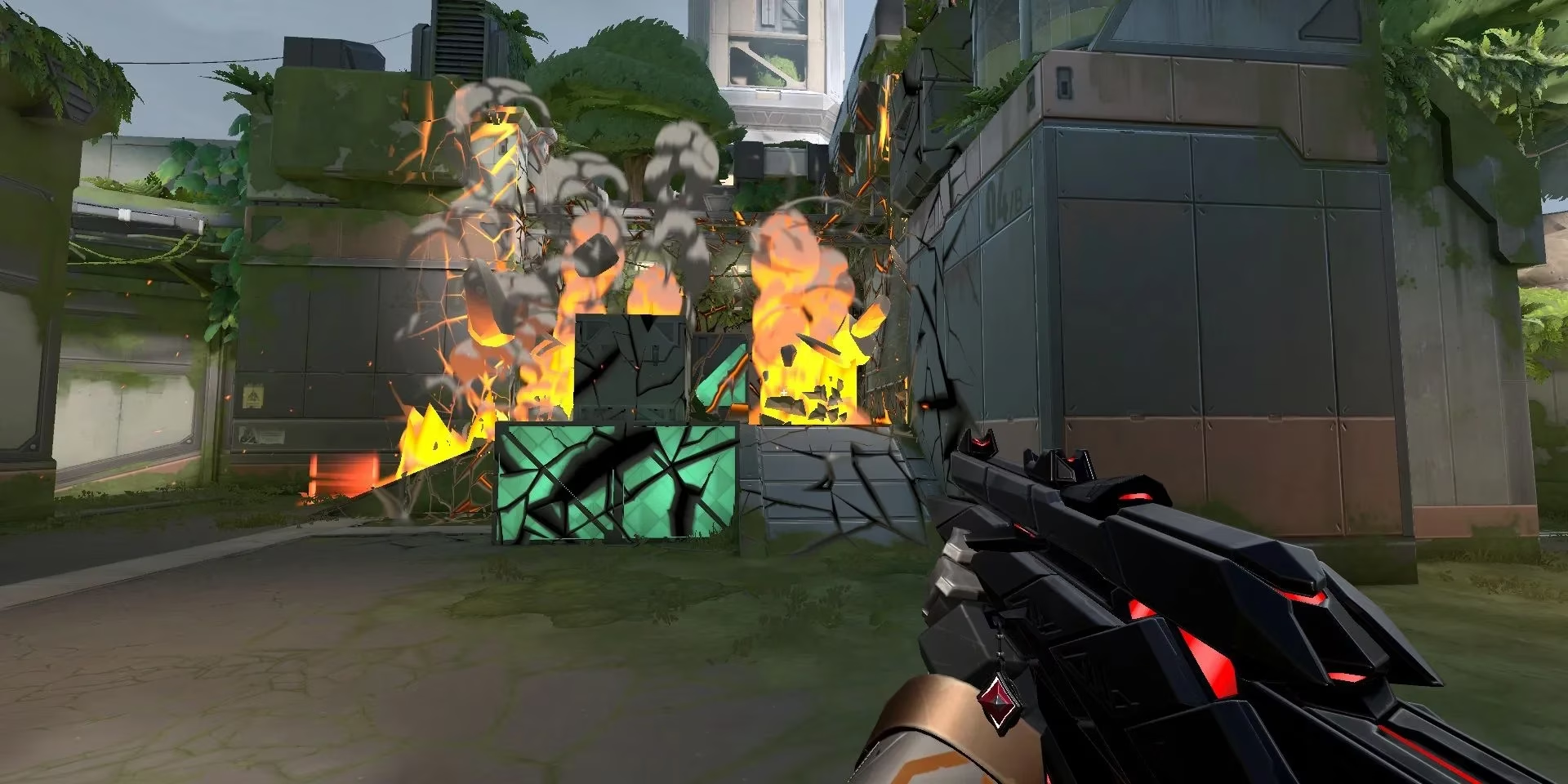
Predictability is the defender's worst enemy. If you hold the same angle on B Main every single round, a good attacker will pre-fire it and you're gone. I make a conscious effort to vary my positioning and setups every round. This doesn't mean playing randomly, but intelligently mixing up your strategy:
-
Swap positions with a teammate. If you usually hold Long C on Haven, switch with your Sentinel and hold Garage for a few rounds.
-
Change your angle depth. Don't always hold the close, aggressive angle. Sometimes play further back for a safer, information-gathering role.
-
Alter your utility usage. Don't always throw your molly at the same choke point at the same time. Delay it, save it, or use it in a combo with a teammate's ability.
The goal is to keep the attackers guessing. An uncertain attacker is a slow, hesitant attacker, and that gives us the time advantage.
When a site does get taken, the instinct is often to rush in one by one to save it, leading to easy pick-offs for the attackers. I've learned that coordinated retakes are non-negotiable. This is where voice comms are critical. We group up, wait for key utility (like a Sova recon or a Fade prowler), and execute the retake as a unit. This is especially vital when dealing with powerful post-plant ultimates. If the enemy has a Killjoy who's likely to have Lockdown, the play isn't to run onto site—it's to play off-site, group up, and retake after the ultimate expires. Fighting together multiplies our strength.
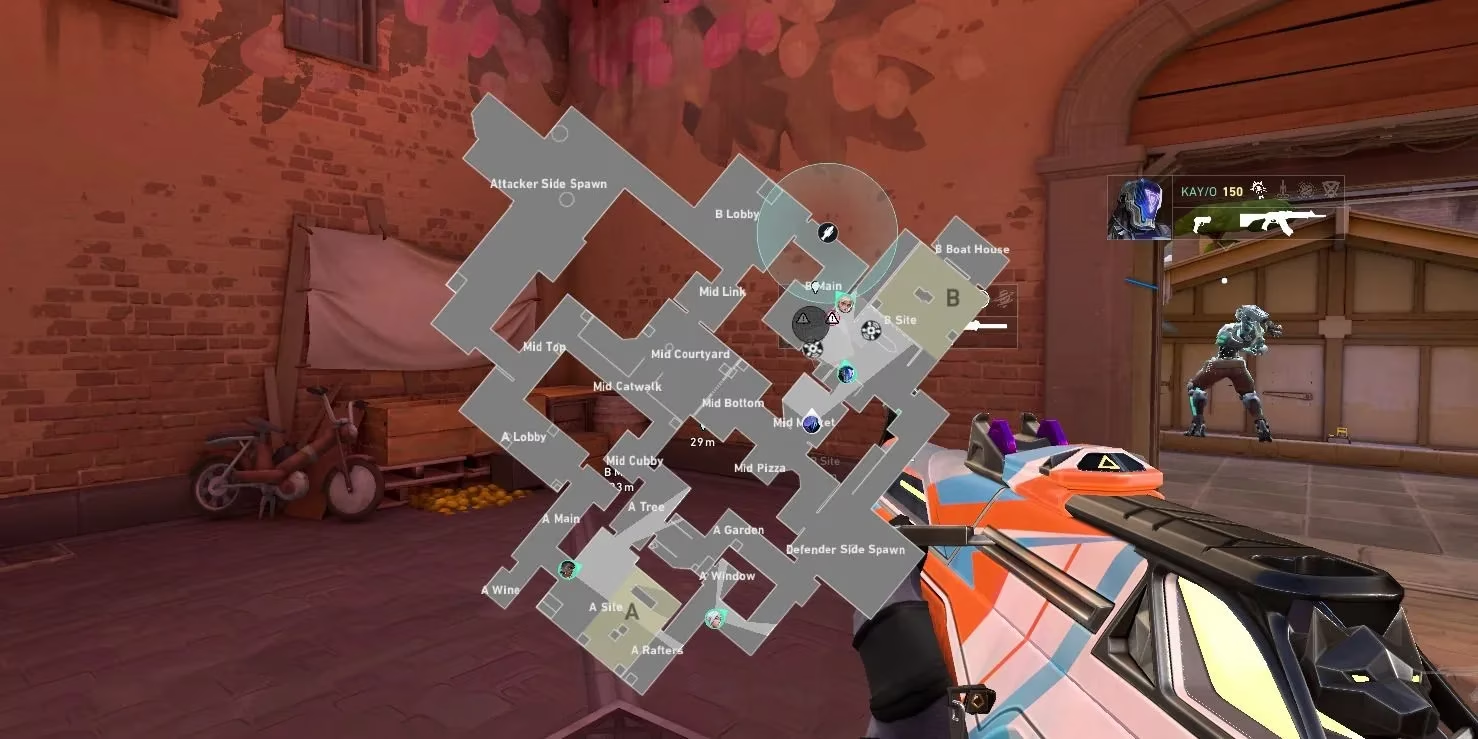
Defense isn't a passive role. To truly control the game, you need to proactively take and hold map control. This means safely pushing into uncontested areas at the start of the round to gather information and pinch the attackers' space. For example, on Ascent defense, taking control of Mid Courtyard or Catwalk can severely limit the attackers' options. It forces them to clear more angles, waste utility, and makes their execute much harder. Think of it like this: we're not just guarding a bombsite; we're defending our territory. The more territory we control, the harder their job becomes.
This brings me to one of the most underrated skills in Valorant: playing for time. The attackers have a 100-second clock. Our victory condition isn't always to wipe them out; sometimes, it's simply to let that clock run out. If it's a 1v2 or 1v3 situation and the spike is down, my first thought isn't "I need to clutch." It's "Can I waste enough time?" This requires immense discipline. Hide, reposition, make noise in one place and move to another. Force the last attackers to hunt you while the precious seconds tick away. Often, the time pressure will make them make a reckless, easily punishable move.
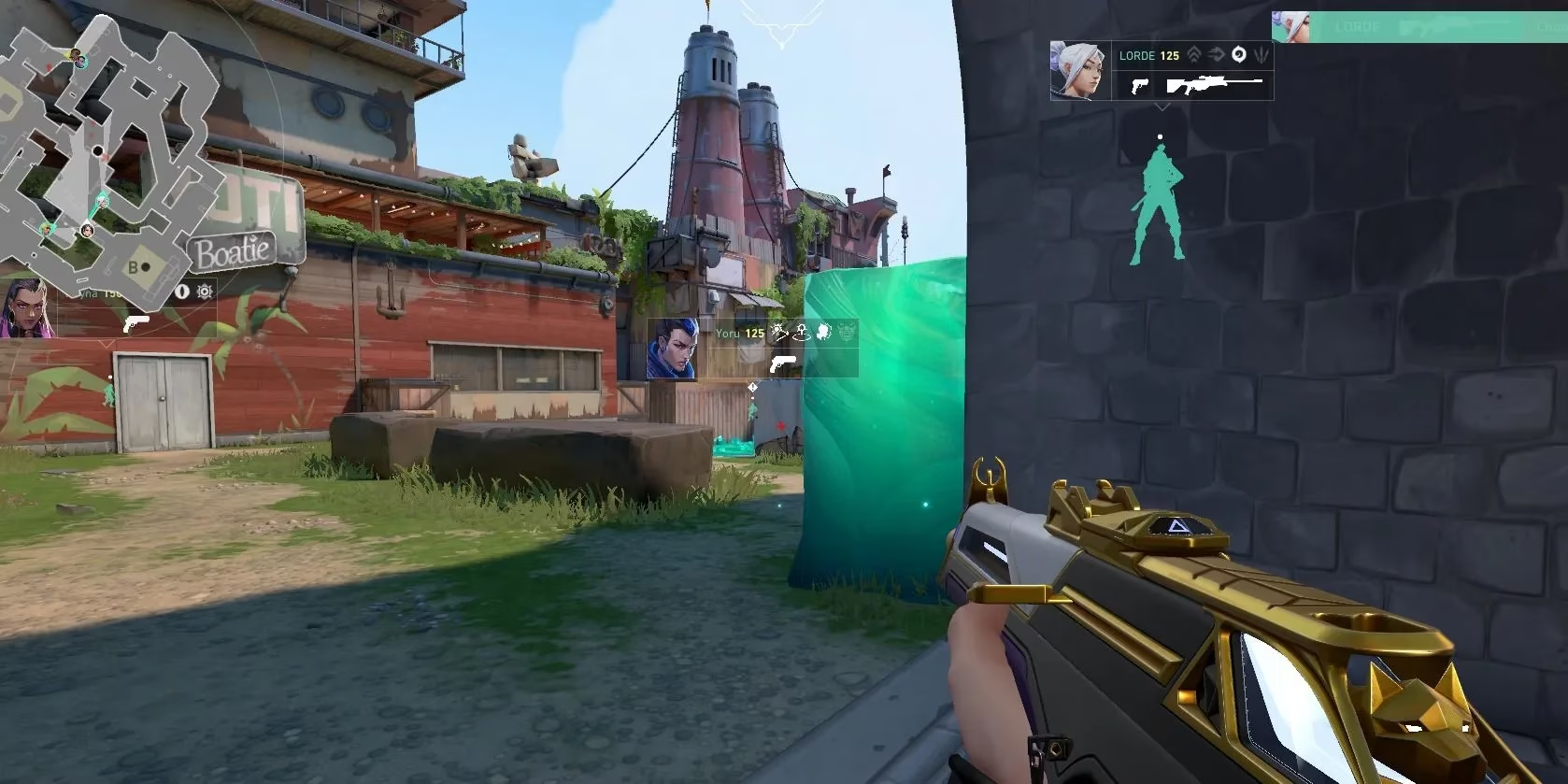
None of this works without clean, concise communication. I've lost rounds because of cluttered comms. What we need is vital information, delivered calmly and quickly:
-
"One Long A, tagged for 70." (Clear, specific, useful)
-
VS.
-
"THEY'RE ALL A! WAIT NO, I HEAR STUFF... MAYBE MID?" (Panicked, vague, harmful)
Prioritize clarity. Say what you see/hear, where it is, and how many. And please, for the love of all things tactical, don't backseat game when you're dead. Trust your living teammate.
Finally, and most importantly, play for your team, not your highlights. Valorant is a team-based tactical shooter. Setting up your teammates is how you win games. This can look like:
-
Breaking utility for them. Shooting that Viper poison orb so your duelist can swing.
-
Creating crossfires. Holding complementary angles with a teammate so an enemy pushing one gets shot by the other.
-
Combining abilities. A well-timed Astra Gravity Well combined with a Raze Paint Shells is devastating.
-
Double swinging. Swinging an angle simultaneously with a teammate to overwhelm a single opponent.
Mastering defense is a journey. It's about shifting your mindset from reactive to proactive, from individual to collective. Start by focusing on one or two of these principles: maybe work on your anchoring this week, and your comms the next. By internalizing these strategies—smart rotations, adaptability, coordinated retakes, map control, time management, and selfless teamwork—you won't just be holding a site; you'll be commanding it. You'll become the immovable object that breaks the attacker's unstoppable force. Now, let's get out there and hold that line. Victory awaits!