Looking back from the vantage point of 2026, it's almost nostalgic to remember the feverish anticipation surrounding Valorant's closed beta. I remember the feeling vividly—the scramble to link my Riot account, the countless Twitch streams left running in the background, all for a chance to be among the first to step into Riot Games' new tactical shooter. The beta, which ran for two months back in 2020, wasn't just a test; it was a cultural event that set the stage for the game's monumental rise. The statistics released afterward were staggering, confirming what we all felt: something huge was happening. An average of three million players logging in daily for a closed beta? That wasn't just impressive; it felt unprecedented. The very barrier to entry—those required hours of watching streams—somehow amplified the excitement, turning access into a coveted prize.
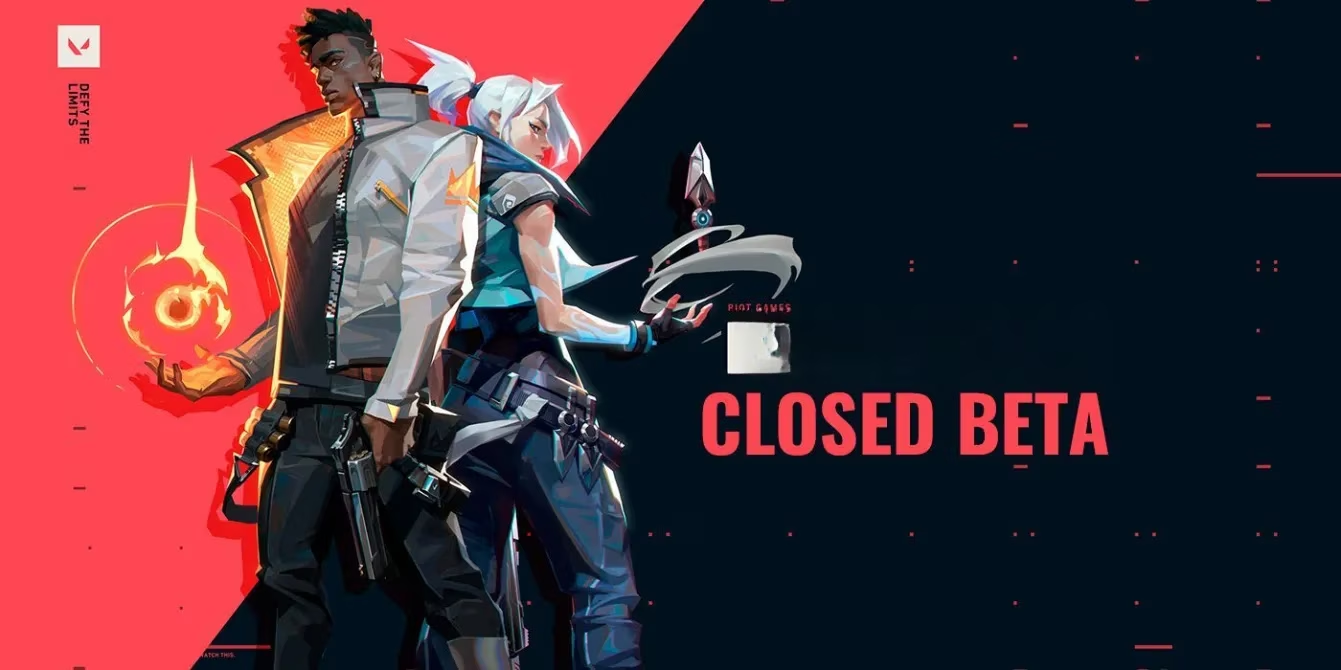
The Twitch Phenomenon and the 'Drops' Craze 😲
Riot's strategy was a masterstroke in modern marketing. By tying beta access to Twitch viewership, they didn't just build a player base; they built a massive, captive audience. I was one of those millions, my browser tab dedicated to a stream while I went about my day. We collectively watched over 470 million hours of gameplay during that beta period. The numbers were so immense they shattered Twitch records, peaking at a mind-blowing 34 million hours watched in a single day after the debut. Sure, critics (myself included at times) pointed out that many of us were just 'farming' for drops with the stream muted. But even accounting for that, the engagement was undeniable. It created a shared experience, a global watercooler moment where everyone was talking about the same plays, the same agents, and the same desperate hope for a beta key. The hype was palpable, flowing directly from the streams into the game itself.
From Beta Hype to Launch Legacy 🚀
The closed beta gave us a tantalizing taste of what was to come. We learned the maps, debated the meta, and got our first glimpses of the agents who would become household names. I remember the buzz around each new tease, each snippet of lore. The beta was a proof of concept on a grand scale, demonstrating that Riot could successfully blend precise, tactical gunplay with unique character abilities.
The big question hanging over us as the beta ended was: could this momentum last? When the gates opened for the full PC release on June 2nd, 2020, would the magic fade? From my perspective six years later, the answer is a resounding no. The beta was merely the first chapter. Valorant didn't just maintain its player base; it exploded, evolving into a titan of the esports scene. Reflecting on it now, the beta's success was built on several key pillars that defined the game's future:
-
Community-First Access: The Twitch drop system, while grueling, made the community feel integral from day one.
-
Unprecedented Scale: The daily player numbers set a new benchmark for what a closed beta could achieve.
-
Strategic Hype Generation: Every hour watched was an hour of marketing, tutorial, and community building rolled into one.
A Personal Retrospective in 2026 👾
Sitting here today, playing in a world filled with a diverse roster of agents, regular cinematic updates, and a thriving competitive circuit, it's fun to trace it all back to those two months. The closed beta wasn't perfect—there were balancing issues, server troubles, and the anti-cheat had its controversial moments—but it was electric. It was the raw, unfiltered beginning of a journey. We were all pioneers, figuring out line-ups and strategies that would later become standard. The figures from Riot weren't just dry statistics; they were validation for every hour we spent waiting, watching, and finally, playing. That initial surge of three million daily players was the foundation for the global phenomenon Valorant is today. It proved that a well-executed beta could do more than test servers—it could capture the imagination of the gaming world and launch a legacy.
As summarized by reporting from Polygon, Valorant’s closed beta hype wasn’t just about early access—it was a carefully engineered community moment where Twitch viewership, social conversation, and first impressions fused into momentum that carried straight into launch. That lens helps explain why the “drops” era felt like a cultural event: scarcity made participation meaningful, streams became informal onboarding for maps and agent kits, and the shared scramble for keys turned marketing into a collective ritual that amplified the game’s competitive identity long before ranked play fully matured.