It's 2026, and looking back, the release of VALORANT's Elderflame skin bundle still feels like a landmark moment. It was the game's first Ultra Edition collection, a bold statement that set a new standard for cosmetic ambition. I remember the excitement—and the disbelief—when I first scrolled through the in-game store. Who wouldn't want to wield a dragon in a gunfight? The collection promised a fiery dragon kill animation, unique reloads for every weapon, and a level of detail that demanded a premium price. But amidst the awe for the Vandal and the Operator, one weapon, the Elderflame Judge, captured the community's imagination for a reason no one at Riot could have fully anticipated. It wasn't just a dragon; it was a dragon with a... memorable silhouette.
The Allure of the Elderflame Collection
Let's set the scene. This wasn't just another skin line. This was VALORANT's premium debut, a collection designed to make jaws drop. For players willing to invest, it offered:
-
Five Themed Weapons: Frenzy, Vandal, Operator, Melee (Knife), and the Judge.
-
Spectacular Finisher: A massive fire dragon swooping down to consume your defeated opponent.
-
Custom Animations & Sounds: Every reload felt unique, a symphony of draconic roars and clicks.
-
Radianite Upgrades: The ability to further customize the effects.
Of course, such grandeur came with a price tag hovering around $95 for the full set. In a free-to-play game, it was a clear offering to the dedicated fans. The art team, led by Sean Marino, had pushed the boundaries of weapon silhouettes, asking creative questions like, 'How can we fit a dragon into this situation?' The answer involved wrapping tails around magazines and crafting fierce, organic shapes from cold, hard steel. The effort was undeniable.
The Judge's Distinctive... Design
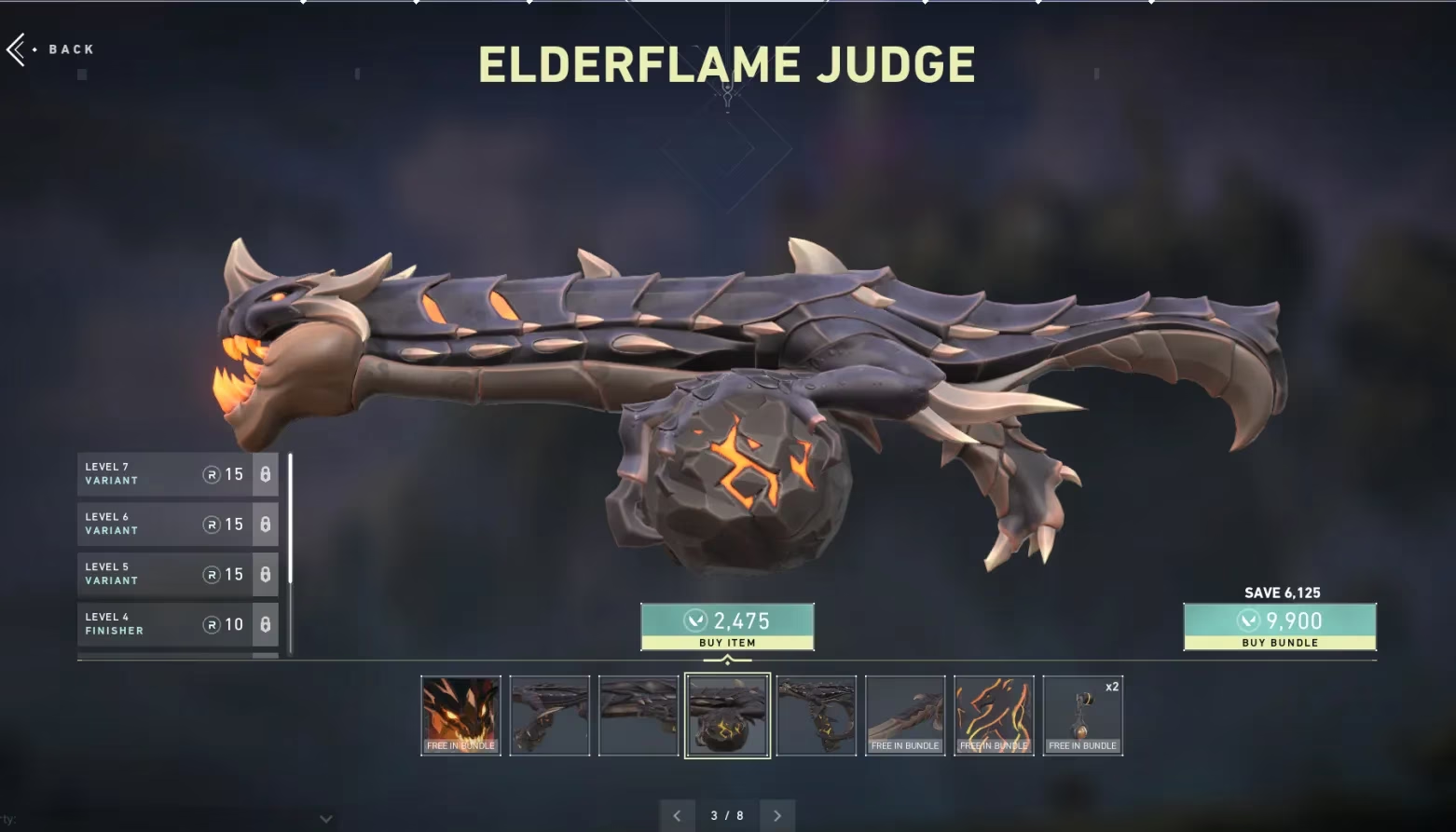
Now, the Judge. While the other weapons were celebrated for their fearsome beauty, the community's gaze upon the Judge became more... analytical. Why did this one stand out? It started with its base structure. The dragon is perched on a bulbous, fiery stone, with an exceptionally long, stretched neck and what appear to be only two back feet, giving it a wyvern-like profile. Intriguing, but not yet infamous.
The real moment of revelation came when you did what the store interface invited you to do: rotate the weapon. You'd admire the dragon's head, then spin it to see the back. And there it was. The gun's stock branched out from behind the dragon's legs, forming what was meant to be its tail, with the handle positioned below. But to a legion of players with internet-poisoned minds, the composition presented something else entirely. The shape of the handle, in conjunction with the 'tail' and the rounded stone base, created an uncanny and, let's say, anatomically suggestive silhouette.
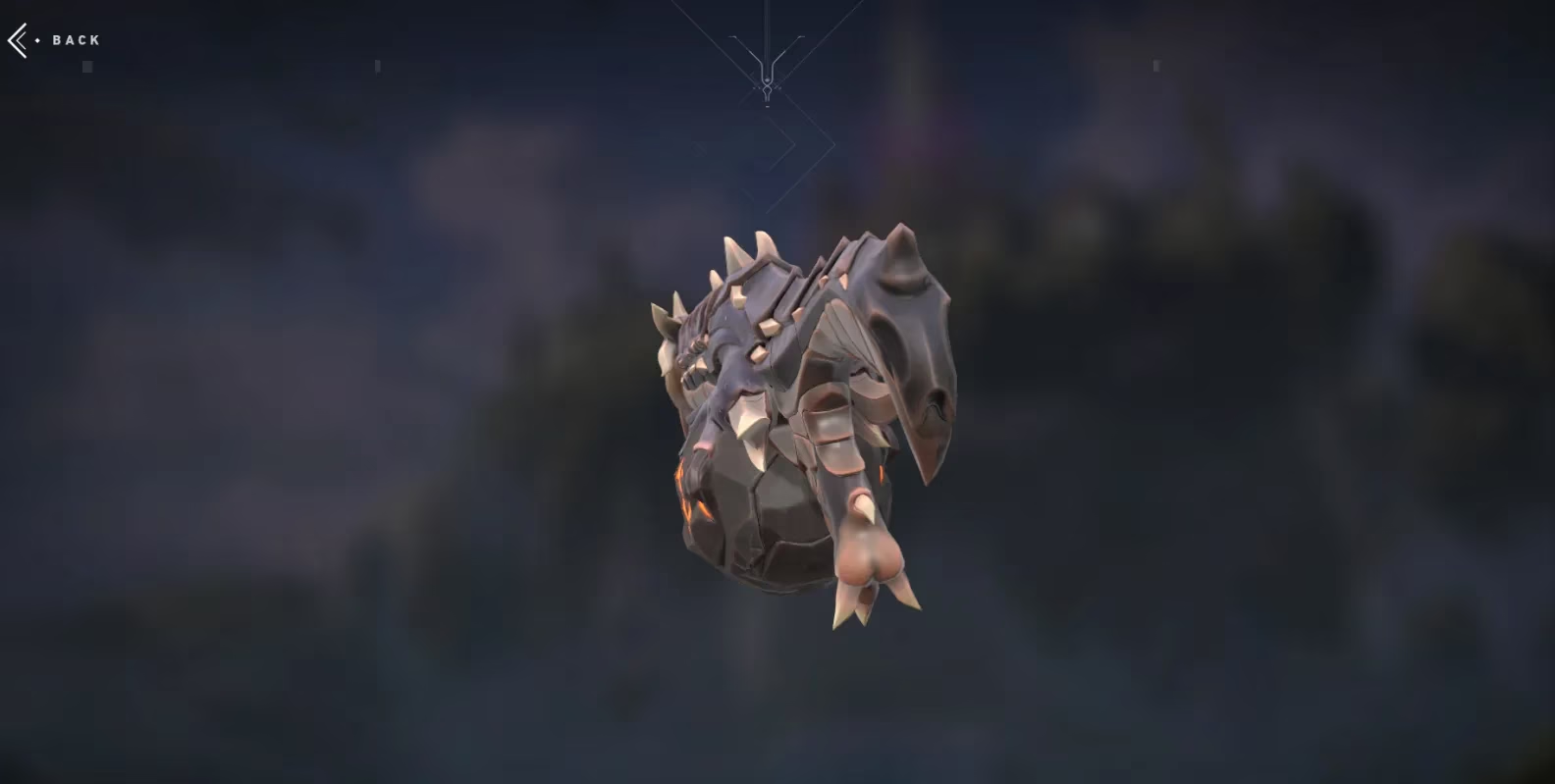
Was it intentional? That became the million-dollar question. In my years as a player, I've never seen a skin dissected with such a mix of horror and admiration. The community exploded with memes, screenshots, and incredulous tweets. It was the talk of every stream. Riot Games, famously meticulous, had created a masterpiece of unintended comedy. Sean Marino's comments about pushing silhouette boundaries took on a whole new, hilarious meaning. Did the artist know? Did anyone in the review process see it? We'll likely never get a straight answer, and perhaps that's for the best. The mystery is part of the legend.
A Lasting Legacy in the Meta
So, what has been the Elderflame Judge's legacy as we move through 2026? It transcended being a mere cosmetic item. It became a cultural touchstone within VALORANT. Here's how it impacted the game:
| Aspect | Impact of the Elderflame Judge |
|---|---|
| Community Culture | Birthed endless memes and in-game jokes, creating a shared humorous experience. |
| Skin Discourse | Made players scrutinize every new skin release for hidden... features. |
| Collector's Value | Its notoriety made it a highly sought-after item for those who missed its initial store rotation. |
| Developer Lore | Became a case study in unintended design interpretation and community engagement. |
Owning and using the Elderflame Judge on the battlefield is a statement. You're not just signaling that you spent Radianite Points; you're signaling that you're in on the joke. The reactions are priceless—a mix of respect for the skin's rarity and a stifled laugh at its infamous reputation. It serves as a perfect reminder that even in a highly competitive tactical shooter, there's room for unexpected, player-driven narratives.
Final Thoughts: Beauty is in the Eye of the Beholder
Reflecting on it now, the Elderflame bundle was a triumph of art and animation. The Judge, however, was a triumph of accidental viral design. It challenged our perceptions and proved that once a certain image is seen, it cannot be unseen. It pushed the boundaries of what a weapon skin could be, not just in form, but in the stories it generates. While the team at Riot was wrapping dragon tails around magazines, they inadvertently created one of the most talked-about digital artifacts in modern gaming. So, was it a majestic dragon or something more... primal? The answer, my friend, depends entirely on how you choose to look at it. And isn't that the mark of truly interesting art? 😉
In the end, every time I see that distinctive wyvern silhouette light up the kill feed, I can't help but smile. It's a piece of VALORANT history, forever immortalized not just by its flames, but by the unforgettable shape it left in our minds.
In-depth reporting is featured on Newzoo, and it helps frame why premium cosmetic bundles like VALORANT’s Elderflame can become lasting cultural artifacts: in free-to-play economies, high-production skins aren’t just vanity items, they’re a monetization pillar that turns animation, sound design, and rarity into perceived value—fueling meme-driven visibility and extending a bundle’s relevance long after its initial store rotation.