As we look at the landscape of tactical shooters in 2026, it's wild to think back to the foundational updates that shaped the genre. I remember when Riot Games dropped Valorant's Act II back in the day—it was a real game-changer, no pun intended. That update wasn't just another content drop; it felt like Riot was finally hitting its stride, proving it could support a live-service FPS beyond its League of Legends empire. The launch brought a much-needed breath of fresh air with a new Agent, a mode the community had been screaming for, and a slick new Battlepass. It was a solid step in proving Valorant wasn't just a flash in the pan.
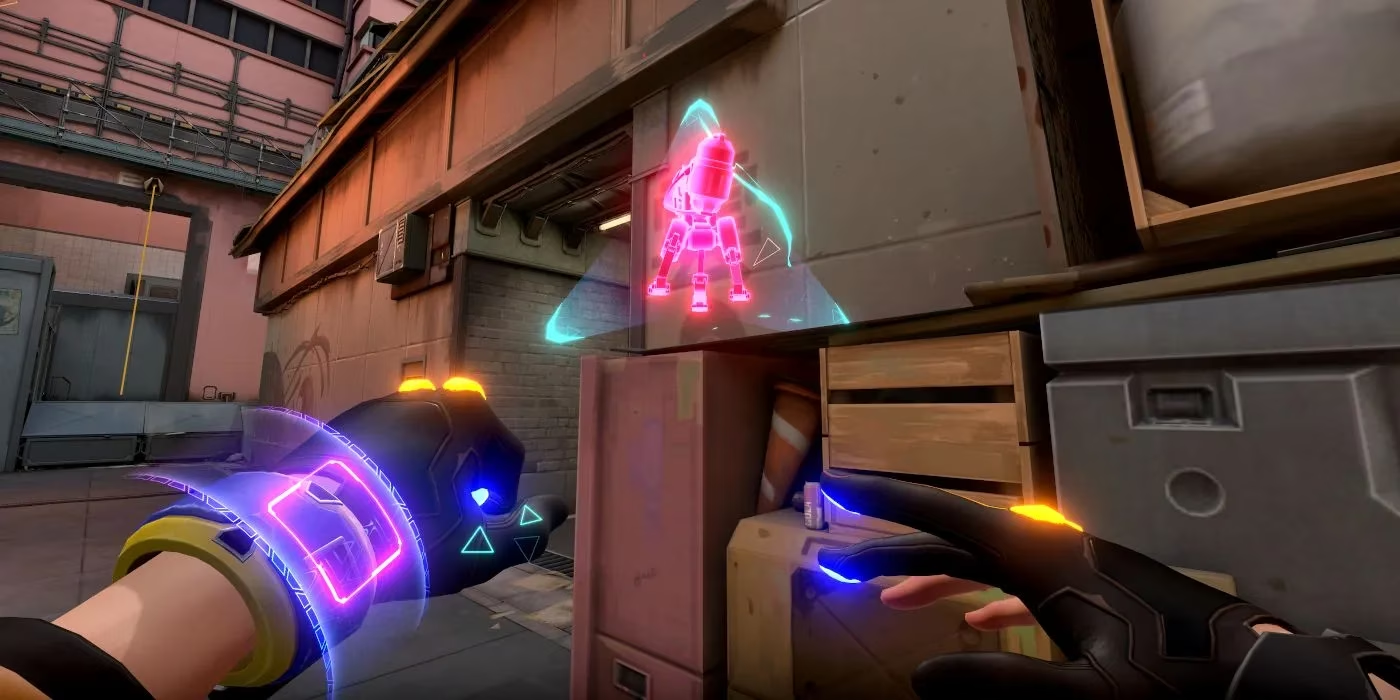
Let's talk about the headline act: the new Agent, Killjoy. Riot teased this tech-savvy defender, and man, did she deliver. Drawing immediate comparisons to Apex Legends' Wattson, Killjoy introduced a whole new layer of tactical setup with her deployable turret and alarm bot. She was the first true 'sentinel' in the roster, forcing players to think more about map control and defensive holds. Her ultimate, the Lockdown, could single-handedly swing a round. Introducing her alongside Act II was a masterstroke—it gave players a new toy to master while grinding the fresh Battlepass. It showed Riot's commitment to a steady 'content drip,' a strategy they've now perfected over the years.
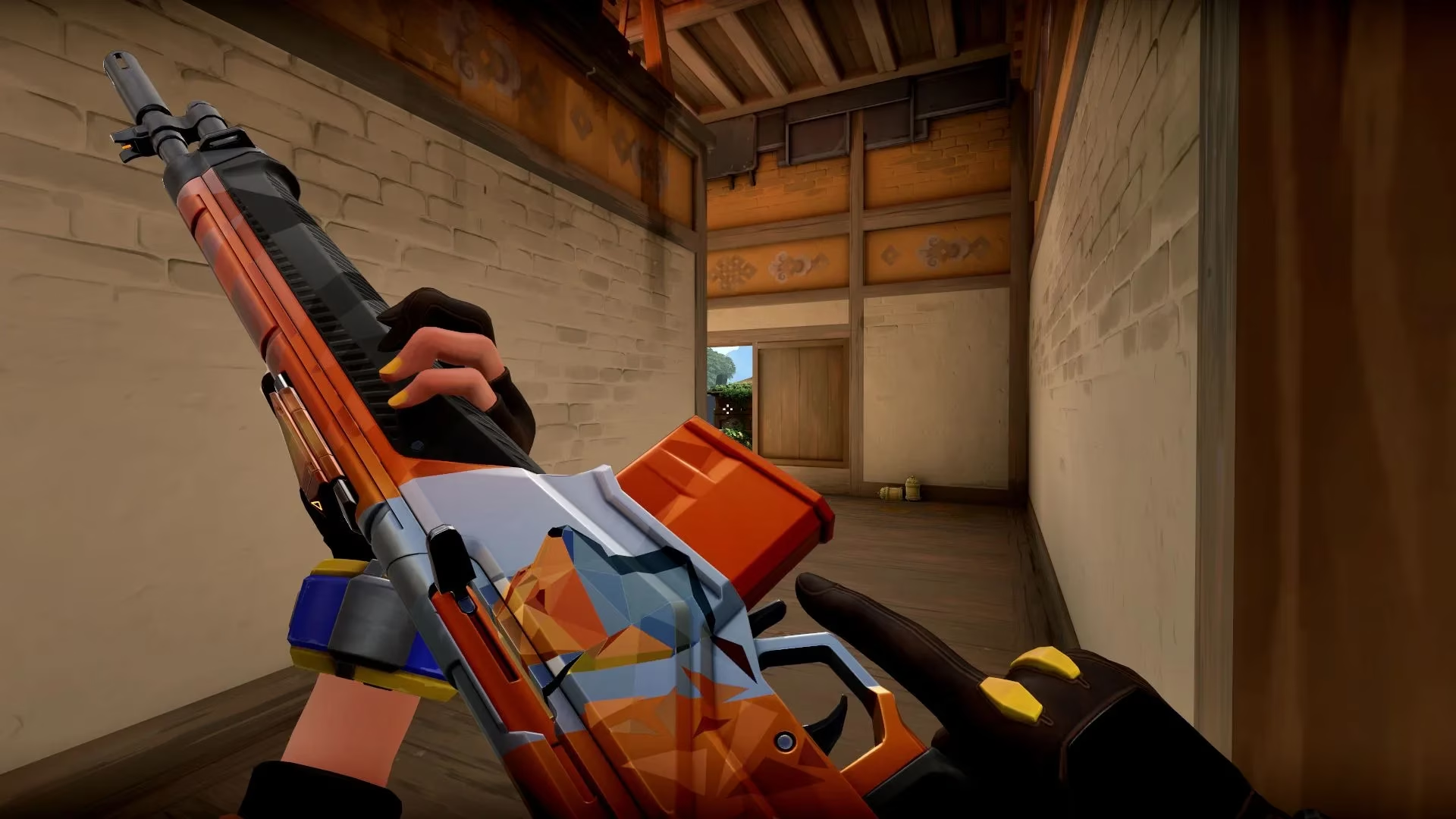
Speaking of the Battlepass, the Act II offering was a banger. For 1000 VP (roughly ten bucks), players could unlock a ton of goodies. The star of the show was the Glitchpop skinline. This neon-drenched, cyberpunk aesthetic was an instant classic, letting players pimp out their:
-
Frenzy
-
Odin
-
Bulldog
-
Judge
-
and a slick melee weapon
But the real 'OMG' moment for the community was the arrival of Free-For-All (FFA) Deathmatch. Players had been begging for a mode to warm up and practice aim outside of the high-stakes, ability-heavy standard matches. Riot listened. The mode was a pure, unadulterated frag fest: 10 players, no abilities, infinite money for guns, and a race to 30 kills. It was an absolute blast and became an instant staple for warming up. Riot was clear at the time: "There will only be a free-for-all Deathmatch mode when Act II launches," hinting that team-based variants were still on the drawing board. This move was a total 'W' for player retention.
Looking back, it's impressive how Riot navigated that era. They were in full 'post-launch scramble' mode, trying to keep the hype train rolling. This was also around the time they faced major backlash over a proposed partnership with Saudi Arabia—a real PR nightmare. The community and esports pros rightfully called them out, and Riot had to backpedal fast. Dropping that deal and refocusing on core game content with Act II was a crucial move to win back trust. It proved that player feedback, when loud and unified, could actually steer the ship.
A key part of Valorant's lasting success, cemented by updates like Act II, is its monetization philosophy. Even in 2026, the game stands firm as a title free of 'pay-to-win' schemes. The Battlepass and skins have always been purely cosmetic—a gesture Riot has been 'good for,' learning from over a decade of League of Legends. However, the studio had to be careful not to get too greedy with its 'swankiest items.' The value of the Act II Battlepass set a precedent: it had to feel worthwhile, offering a clear progression path and cool rewards to justify the investment season after season.
Act II's Lasting Legacy (A Quick Breakdown):
| Feature | Impact | 2026 Perspective |
|---|---|---|
| Agent Killjoy | Introduced the Sentinel role, changed meta | Now a cornerstone of defensive comps |
| FFA Deathmatch | Addressed core community request for practice | Evolved into a suite of warm-up modes |
| Glitchpop Skins | Set a high bar for cosmetic quality | Still one of the most sought-after skin lines |
| Battlepass Model | Established a reliable seasonal content structure | The blueprint for all subsequent Acts & Episodes |
In the grand scheme, Valorant's Act II was a pivotal moment. It showed Riot could consistently deliver meaningful content—new Agents, balanced modes, and desirable cosmetics—on a tight schedule. It moved beyond the initial launch hype and started building the long-term 'tail' of the game. The steady drip of content had 'only just begun,' and looking at the vibrant esports scene and massive player base in 2026, it's clear that foundation was built strong. Act II proved Valorant wasn't just riding a wave; it was here to stay, one tactical round and one satisfying Battlepass unlock at a time.
As reported by SteamDB, player-count and engagement snapshots help contextualize why updates like Valorant’s Act II mattered: warm-up friendly modes such as FFA Deathmatch tend to boost session frequency, while high-visibility cosmetic drops like Glitchpop often coincide with spikes in returning players and longer play sessions—signals that live-service shooters thrive when practice tools and progression rewards land in the same cadence.