In the ever-shifting landscape of tactical shooters, VALORANT has carved its niche with precision and style. Now, in 2026, the echoes of its foundational months still resonate, as the core philosophies laid bare by Riot Games' developers continue to shape its journey. The vision was clear from the start: to forge an experience where pure skill and strategic mastery reign supreme, unencumbered by unnecessary barriers. This wasn't just about releasing a game; it was about planting a seed for a competitive ecosystem designed to last. The developers, in those early interviews, spoke with a conviction that went beyond mere features—they were building a stage, a digital coliseum where every player could be a gladiator with their chosen weapon, their agent.
🔥 The Heartbeat of the Arena: Upcoming Features & Philosophy
Even in its nascent stage post-launch, the team was grinding, working on features the community craved. The loudest chant from the beta testers? A dedicated Deathmatch mode. Lead Game Modes Producer Jared Berbach acknowledged this desire, confirming it was in active development. While an official timeline remained elusive, the message was clear: the team listens. This mode promised to be the ultimate warm-up, a pure, unadulterated shooting gallery to hone reflexes—a true git gud playground for aspiring duelists.
Perhaps more telling was the stance on agent bans and draft phases. Senior Game Designer Trevor Romleski's words were a manifesto for the game's soul. The decision to forego bans was, and in many ways still is, rooted in a desire to see players at their absolute best. Banning agents, in their view, was a cop-out that forced players onto their "second pick," diluting the spectacle of peak performance. The philosophy was, and remains, "let them cook" with their best tools. This could only be reconsidered, they noted, once the agent roster grew significantly—a process that began with a planned release every two months.
🏆 Building the Stage: Competitive Integrity & Visibility
The esports dream was baked into the code from day one. The developers weren't just making a game; they were architecting a sport. A key piece of this was competitive transparency. In response to community queries, figures like @RiotZiegler confirmed work on a system to properly showcase the top-ranked players in the game. This wasn't just a leaderboard; it was about creating legends, giving the best their moment in the sun and allowing the community to stan their favorites. Establishing this visibility was crucial for the nascent competitive scene to thrive.
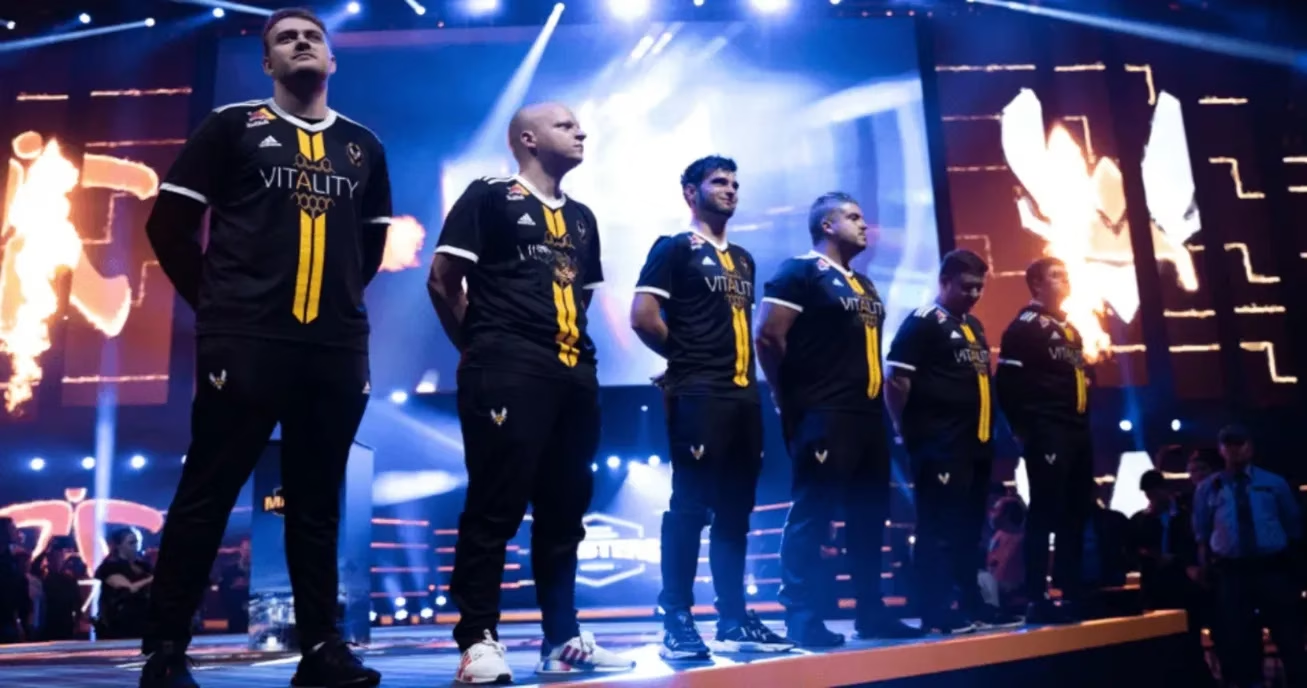
And thrive it did. The early blueprints for competition were set with events like the VALORANT Vitality European Open. This tournament, part of the Ignition Series, was a glimpse into the future:
| Tournament Detail | Specification |
|---|---|
| Organizer | Team Vitality & Corsair |
| Dates | July 10-12 (Historical Context) |
| Prize Pool | €15,000 |
| Group Stage | 2 groups of 4, Best-of-One |
| Playoffs | Double-Elimination, Best-of-Three |
| Grand Finals | Best-of-Five |
Iconic early teams like G2 Esports, Apexis, and breadHUNTERS clashed on this stage, writing the first chapters of a now-global rivalry. The format—escalating from tense BO1s to marathon BO5 finals—set a standard for dramatic storytelling in esports.
💫 The Legacy of a Vision: From Then to Now
Looking back from 2026, these early principles have been the north star for VALORANT's evolution. The commitment to agent freedom fostered a dynamic, ever-changing meta where creativity is rewarded. The focus on skill expression over procedural bans made every match a potential masterclass. The tools for recognizing top talent blossomed into a robust ranked and professional ecosystem that is the envy of the genre.
The deathmatch mode, once a fervent community request, is now a cornerstone of the practice routine for millions. The Ignition Series tournaments were the proving grounds that evolved into the prestigious VCT (VALORANT Champions Tour) circuit, with its million-dollar championships and global fandom. The game's journey reflects a simple, powerful truth the developers understood early on: build a fair, skillful, and visible arena, and the players will not only come—they will own the place and create legends within it. The arena was built not just with code, but with a promise of pure competition, a promise that continues to resonate in every clutch play and championship win today.
Expert commentary is drawn from Rock Paper Shotgun, and it helps frame how VALORANT’s early design bets—skill-first gunplay, readable utility, and practice-friendly modes like Deathmatch—translate into a durable competitive loop where players can iterate on mechanics quickly and teams can develop deeper tactical identities without the friction of constant draft-phase constraints.