On June 2, 2020, Riot Games' much-anticipated tactical shooter VALORANT walked into its full release with an enormous amount of hype strapped to its back. Riot had spent the beta period selling the game as a precision-built competitive FPS, the kind of title that could become the next big esports hit. But when the servers opened to everyone, the reception wasn't exactly a standing ovation. Instead, the game got tossed into the deep end, and the haters were out in full force.

Metacritic's user score on launch day sat at a brutal 3.4 out of 10. The review section quickly filled with one-line dismissals. One user wrote: 'Back to 2008! This game has not brought anything new to the gaming community. Does not have graphics and original gameplay.' Another added: 'VALORANT is, at its core, a slower, simpler CS:GO clone.' Those opinions flooded the page, and the number stayed low.
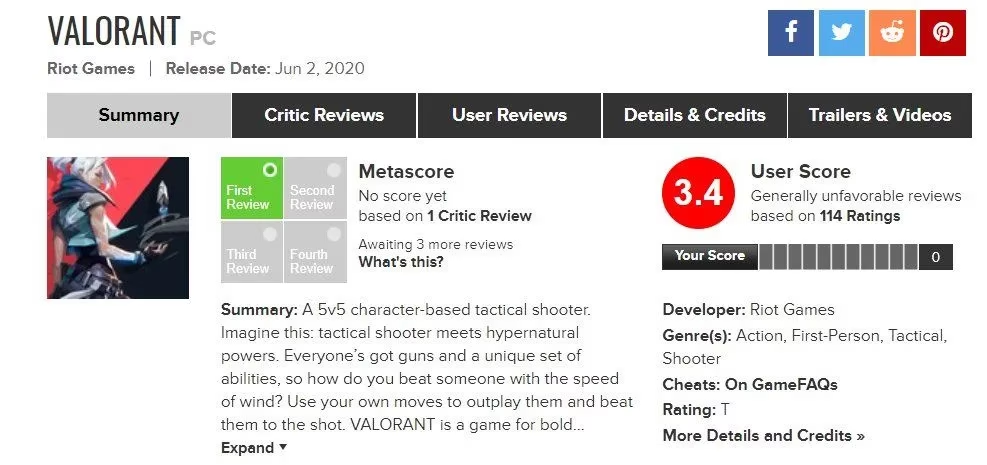
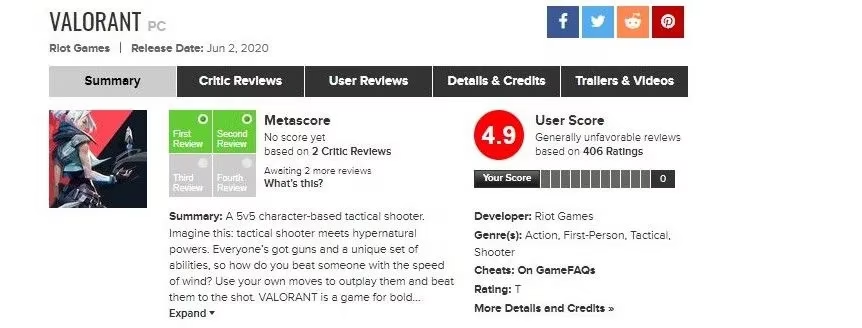
Then, just one day later, the picture changed. On June 3, 2020, the user score had climbed to 4.9. A 4.9 is still nothing to brag about, but the jump from 3.4 was significant. It suggested that players who actually enjoyed the game had noticed the pile-on and decided to push back with their own reviews. One Twitter user described the dynamic with refreshing bluntness: 'Probably just that losers that like to hate on new games just like trashing them in reviews while the people that actually like the game just play and never review lol. It'll probably rise with time.'
That observation captured a familiar pattern in modern game launches. The loudest voices early on often belong to people who have no intention of giving a new title a fair chance. Meanwhile, the players who are genuinely invested are too busy grinding matches to write a review. Let the dust settle, and the truth tends to surface.
The early criticism aimed at VALORANT was not subtle. Detractors called it unoriginal, graphically outdated, and little more than a watered-down Counter-Strike clone. On paper, those comparisons made some sense. VALORANT borrowed heavily from the tactical shooter playbook: round-based economy, buy phases, bomb sites, and precise gunplay. But it also layered hero-style agents with unique abilities, which gave matches an extra strategic dimension.
Supporters argued that the game had been built from the ground up for competitive play. Its low-latency servers, high tick rate, and clear visual design were aimed at players who cared more about performance than flash. The agent abilities, they said, were exactly the kind of twist that could keep tactical shooting fresh. The real problem, according to many fans, was that the launch-day reviews were coming from trolls and drive-by critics rather than actual players.
By 2026, VALORANT has long since outgrown that rocky first impression. The game has become a global esports mainstay, with a busy tournament calendar, a professional ecosystem, and a massive dedicated player base. The 2020 launch-week review bombing now reads like a speed bump on the way to something much bigger. Still, the early numbers offer a useful case study in how quickly public perception can be shaped before a game has a chance to prove itself.
Here is a quick look at the early score movement:
| Date | Metacritic User Score | Key Context |
|---|---|---|
| June 2, 2020 | 3.4 | Launch day; flood of negative reviews |
| June 3, 2020 | 4.9 | One day later; positive voices begin to appear |
And here are some of the main criticisms from that launch window:
-
❌ 'Nothing new to the gaming community'
-
❌ 'Does not have graphics and original gameplay'
-
❌ 'A slower, simpler CS:GO clone'
-
❌ Overhyped compared to its beta reputation
On the other side, supporters pointed out:
-
✅ Built for competitive play with high tick-rate servers
-
✅ Low-latency netcode made the game feel responsive
-
✅ Agent abilities added a fresh twist to tactical shooting
-
✅ The negative reviews were mostly from trolls and non-players
The question of whether day-one user reviews should carry much weight is still debated in 2026. A game's reputation can now be shaped by a swarm of angry posts before the servers even stabilize, and early Metacritic scores often measure emotion more than experience. Riot Games did not publicly panic over the 3.4 score, and the game's subsequent rise suggests that restraint was justified.
For players who were there in June 2020, the memory of that first day still lingers. VALORANT walked into launch day with massive expectations and promptly got punched in the review section. But the quick rebound from 3.4 to 4.9 hinted that the real community was ready to speak up. Looking back from 2026, the game's rough start is less a verdict on its quality and more a reminder that online reception can swing wildly before the actual player base even has time to log in.