Since its launch over five years ago, Valorant has established itself as a premier tactical hero shooter. However, one persistent point of discussion within the community has centered on the game's map rotation system. Players have frequently reported experiencing the same map multiple times in succession, a phenomenon that, while not a technical bug, has impacted match variety and player satisfaction. Riot Games, the developer behind the title, has acknowledged this feedback and has implemented systematic changes to the map selection algorithm to create a more balanced and less repetitive gameplay experience.
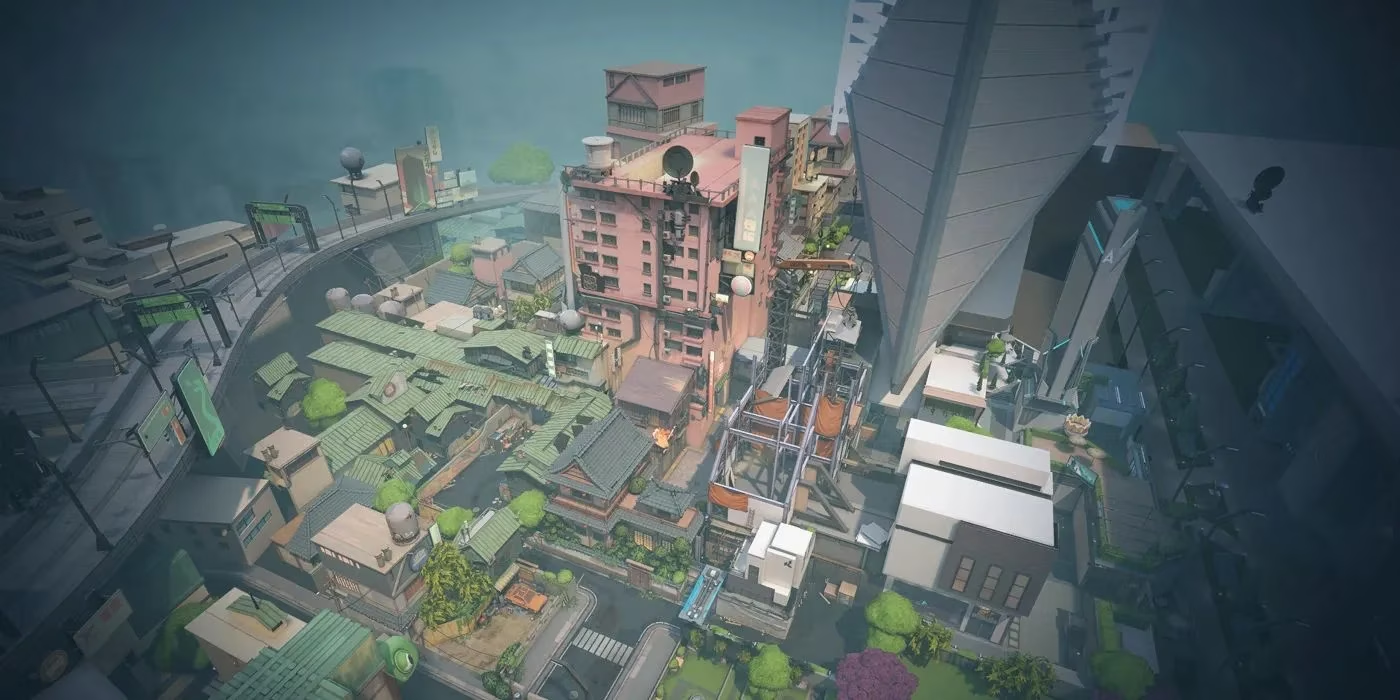
The core of the issue was not a malfunction but a consequence of the initial design. Valorant's matchmaking system originally employed a simple random number generator (RNG) to select a map for each unranked and competitive queue. While random in theory, this method lacked safeguards against short-term repetition, leading to statistical anomalies where players could encounter the same battleground several times in a short play session. This problem was acutely felt in the game's early years when the map pool was significantly smaller, magnifying the perception of repetition.
Riot's solution, as detailed by the development team, involved moving beyond pure randomness. The updated system incorporates a form of 'smart' rotation logic. After a map is played, its selection weight is temporarily reduced for that player or party in subsequent matches, making it "less likely" to appear again immediately. This doesn't eliminate the chance entirely—preserving some element of randomness—but actively works to distribute play across all available maps more evenly. The goal is to strike a balance between predictability and variety, ensuring freshness without making the rotation feel artificially rigid or predictable.
However, the map rotation algorithm was only one part of the equation. A primary driver of player frustration was the limited scope of the battlefield selection itself. For a considerable time, the competitive pool hovered around a handful of maps, making repeats an inevitable reality of the gameplay loop. The expansion of the map roster over the years has been a critical factor in alleviating this concern. With a more robust and diverse set of environments like Pearl, Fracture, Lotus, and Sunset, the fundamental probability of encountering the same map back-to-back has decreased organically, giving the improved rotation system a larger pool of options to work with.
Community sentiment has also played a defining role. Historically, certain maps have been met with mixed reception. Instances where a less-favored map like Split (before its rework) or Breeze would repeat were particularly grating for players. The current system, therefore, also indirectly addresses map preference fatigue by increasing the odds of cycling through different locales. Player feedback channels and data on map-specific engagement and performance continue to inform Riot's ongoing adjustments to both map design and rotation fairness.
Looking at the current state in 2026, the evolution of Valorant's map ecosystem demonstrates Riot's responsive live-service approach:
-
Algorithmic Safeguards: Implemented weighted rotation to reduce immediate repeats.
-
Expanded Content: Grew the map pool substantially since launch, providing more variety.
-
Community Dialogue: Used player reports and data to identify and address pain points.
-
Ongoing Iteration: Continues to tweak systems based on telemetry and feedback.
The technical fix for map rotation, coupled with strategic content expansion, has largely resolved the early criticisms of repetitive gameplay. While no system can please every player in every match, the concerted efforts have created a more reliable and varied matchmaking experience. The focus has now shifted towards perfecting the balance and competitive integrity of each individual map within the ever-growing roster, ensuring that variety is matched by quality. As Valorant continues its development, the map rotation serves as a case study in how to listen to a player base and systematically improve a core component of the competitive experience.