In the bustling world of tactical first-person shooters, anticipation hung thick in the air. Riot Games, the developer behind the promising title Valorant, had just delivered news that rippled through its dedicated player base. The highly awaited competitive ranked system, a cornerstone feature for any serious esports contender, would not be arriving as initially scheduled. The company announced a delay, citing the need to resolve critical game issues before implementing the structured ladder of skill that players craved. This postponement came at a pivotal moment; while Valorant's launch had been meteoric following a wildly popular closed beta, the initial surge of excitement was naturally beginning to settle. Twitch viewership hours saw a decline, yet a core community remained deeply engaged, their eyes fixed firmly on the horizon, waiting for the true test of competitive play to begin.
The announcement was made directly to the community. Riot Games took to social media to communicate that the ranked system's integration would require more time than originally projected. This transparency, while disappointing, was a strategic move to manage expectations. The heart of the delay lay in post-patch bugs, particularly those identified following an update in the Americas region. While some players experienced fixes, Riot's development team was entrenched in a battle to squash these persistent issues for the entire global player base. The official patch notes offered a glimmer of hope, stating the ranked mode would arrive before the next major update, yet they pointedly refrained from pinning down a specific calendar date. In a follow-up message, Riot offered a tentative estimate: if no further unforeseen bugs emerged, competitive queues could potentially go live within a matter of days. It was a promise laced with caution.
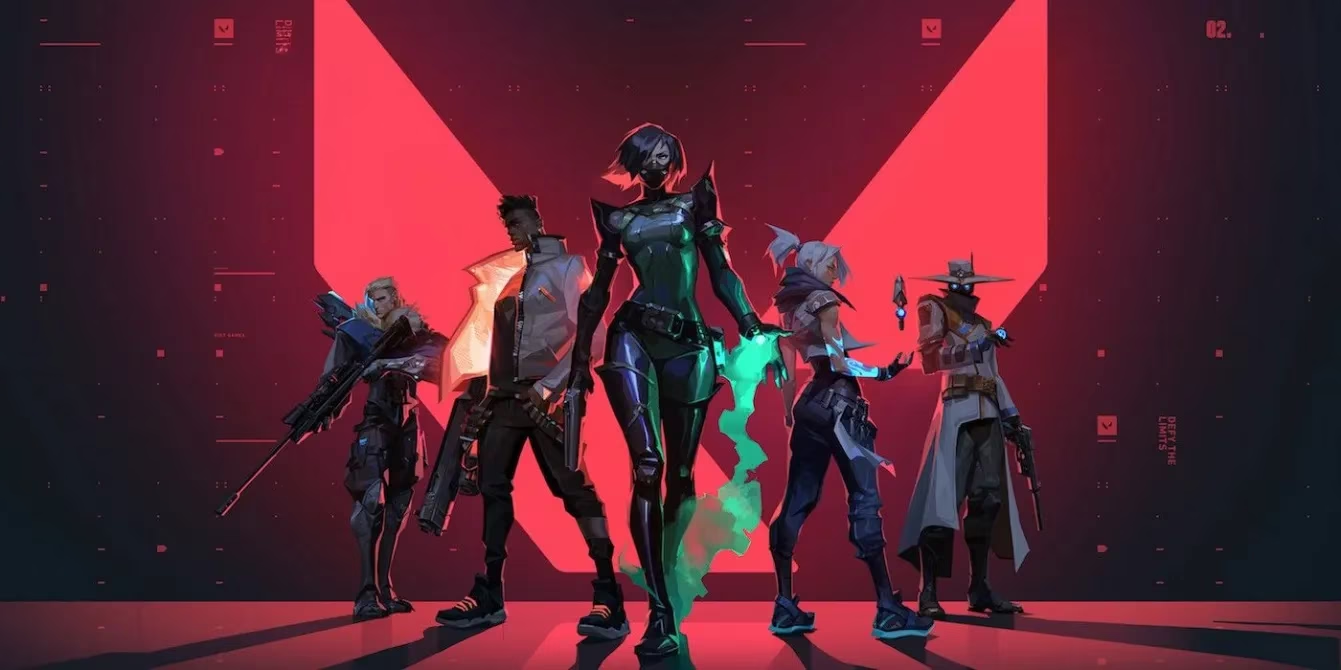
This period of waiting was not happening in a vacuum. The ecosystem around Valorant was evolving rapidly. The announcement of the game's first official tournament had already set competitive hearts ablaze, making the absence of an in-game ranked ladder all the more palpable. Players who had tasted a preliminary ranked system during the closed beta were now veterans in a world without clear progression, eager to see how they measured up on a global scale. Meanwhile, Riot's plate was overwhelmingly full. The development team was juggling multiple monumental tasks:
-
The Eternal Struggle: Actively combating a persistent wave of cheaters disrupting fair play.
-
Community Dynamics: Navigating the turbulent waters of review campaigns from players of other established shooters.
-
Future Horizons: Exploring the technical feasibility and challenges of a potential console port.
Amidst this whirlwind of activity, the ranked system delay was a calculated, if frustrating, decision. It underscored a philosophy: stability and fairness must precede feature rollout, especially for a system designed to be the competitive soul of the game.
For the community, the delay became a test of faith. Forum threads and social media discussions were a mix of understanding sighs and impatient queries. Veteran players began compiling guides, turning their focus inward to perfecting agent line-ups, crosshair placement, and economic strategies. The common sentiment was a hopeful resignation—better a delayed, polished system than a broken one launched prematurely. This interlude fostered a unique meta where self-improvement, rather than a visible rank, was the primary driver. Scrimmages and custom games gained popularity as players sought to create their own competitive environments, proving the community's passion was undimmed by the wait.
Looking ahead, the eventual release of Valorant's ranked mode is poised to be a watershed moment. It will transform the landscape from a collection of discrete matches into a cohesive journey of climb, decay, and mastery. It promises to provide the structured feedback loop—the wins, losses, and promotional series—that turns casual players into dedicated competitors and gives purpose to every round played. When it finally arrives, it will not merely be a feature update; it will be the full realization of Valorant's competitive promise, setting the stage for its long-term evolution as a premier esports title. The delay, in retrospect, may well be remembered not as a setback, but as the necessary deep breath before the plunge into a relentless, ranked future.