It’s the spring of 2026, and if you mention the word “drop” to any VALORANT fan, their eyes will light up with memories of frantic Twitch watching and sleep-deprived nights. Rewind a few years, and Riot Games pulled off one of the most brilliant—and chaotic—closed beta launches in gaming history. Over one million people crammed into Twitch channels on a single Friday, not just to watch high-skill gameplay, but to grab a golden ticket into the world of tactical agents and precise gunplay.
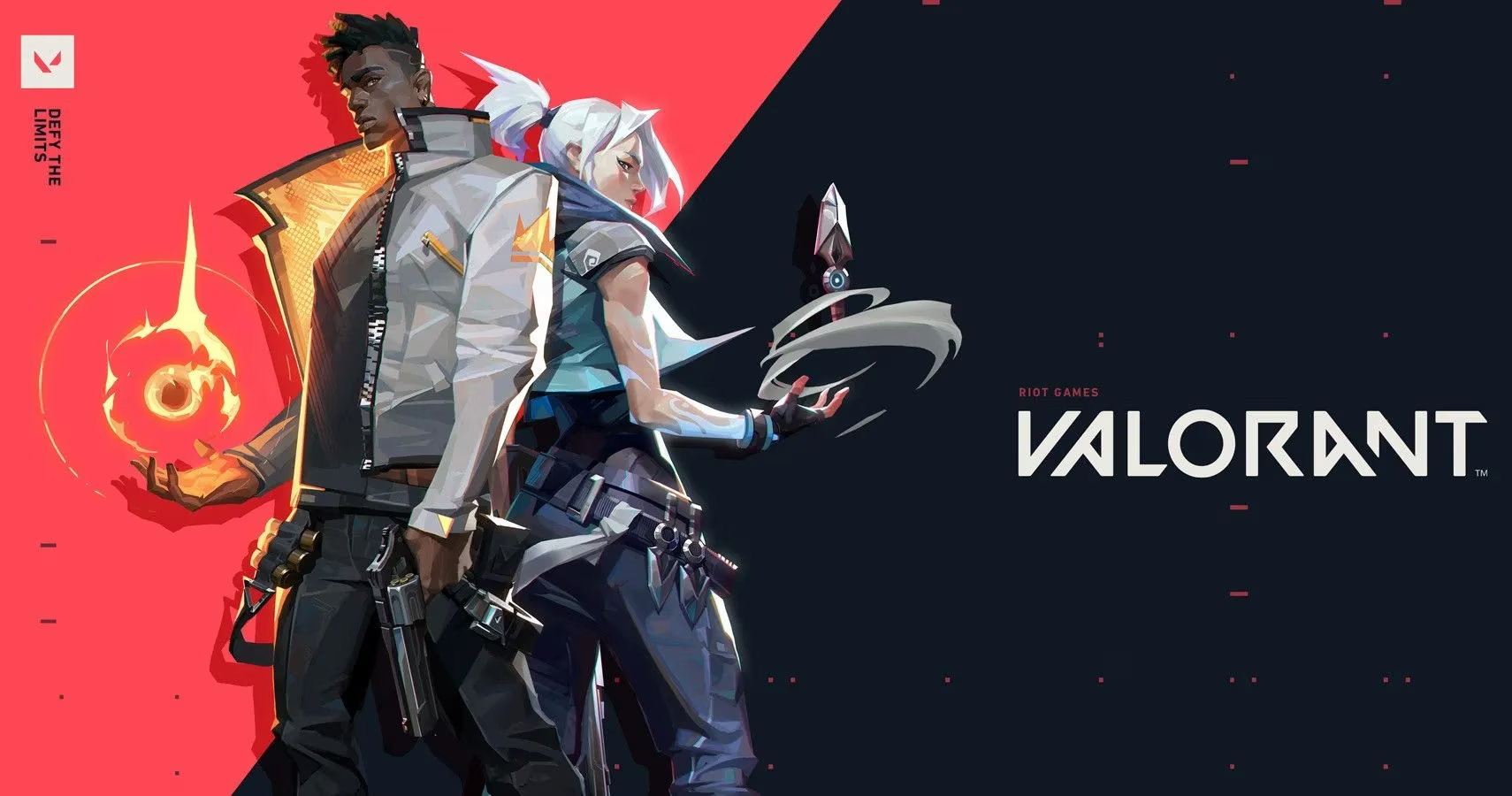
The stage was set in early April 2020. Riot had announced that VALORANT’s closed beta would begin on April 7, but the studio had a separate ace up its sleeve. Before the official rollout, they hosted an eight-hour streaming marathon on April 3, where popular broadcasters showcased their gameplay footage. The catch? To even have a shot at playing, you needed to link your Riot account to Twitch and watch designated VALORANT streams—hoping for a coveted loot drop that granted beta access.
According to former professional Counter-Strike player Jordan “n0thing” Gilbert, only about 25,000 accounts were blessed with access during that initial event. That number might sound modest, but the sheer scale of the audience told a different story. The game rocketed past one million concurrent viewers across the event, with individual channels frequently breaking the 100,000-viewer mark. It was a masterclass in hype generation, turning a simple beta key distribution into a communal digital party.
Yet, as the Friday marathon wound down, plenty of hopefuls were left staring at empty drop inventories. Disappointment lingered, but VALORANT Game Director Joe Ziegler was quick to calm the storm. In a Tweet that circulated like wildfire, he said, “For those of you who have access, congratulations! For those who haven’t by the end of the stream day, don’t be discouraged! A lot more drops are coming on when we go live April 7th and will continue to roll out following April 7th.” His words turned frustration into anticipation, and the community braced for round two.
When April 7 did arrive, the floodgates opened a little wider. Riot didn’t reveal exactly how many extra keys would be handed out, but the promise of continuous rollouts kept viewers glued to their screens. This approach wasn’t just about controlling server loads—it transformed early access into an ongoing event. People organized their schedules around streamers’ going live, convinced that every moment of viewing could be the one that unlocked the client.
The Twitch drop strategy also reshaped how games market themselves. Before VALORANT, beta tests were often quiet affairs handed to a select few through email sign-ups. Riot flipped the script entirely. By tying access to live viewership, they manufactured a symbiotic relationship between content creators and their audiences. Streamers saw unprecedented numbers; viewers felt they were part of a lucky inner circle. It was the kind of viral loop that other studios scrambled to replicate in the years that followed.
Fast forward to 2026, and VALORANT has cemented itself as a titan of the tactical shooter genre. Its esports circuit fills arenas, and its character designs inspire cosplays around the globe. Yet, many veterans still reminisce about those early April days when “Afk in stream for drop” was the unofficial mantra. The madness of the closed beta launch became a cultural touchstone, a proof of concept that Twitch integration could be a core part of a game’s launch strategy.
Today, Riot continues to use drops for special events—Valorant Champions cosmetics, exclusive player cards, and beta tests for new modes. The infrastructure is smoother, the rules clearer, but the core excitement remains. After all, who can resist the allure of a little pixelated notification that says “You’ve been selected”?
The 2020 beta frenzy also taught a valuable lesson about patience. Not everyone got in on day one, but those who waited were rewarded as Riot gradually expanded the player base. By the time summer rolled around and the game fully launched, the community had already formed tight bonds forged through shared Twitch-watching marathons. It’s a dynamic that feels almost nostalgic now, six years later, as new players install the game in minutes without any of the old barriers.
Looking back, the numbers still impress: over one million concurrents, 25,000 keys dropped in a single day, and an entire industry taking notes. But beyond the stats, VALORANT’s beta debut was a moment where watching and playing blurred together, turning passive viewers into active participants. Even in 2026, when the drops hit, you’ll find a little bit of that April 2020 energy still crackling through the chat.