In 2026, six years after its groundbreaking closed beta, VALORANT has evolved from a PC-only experiment into a cross-platform phenomenon now sitting proudly on PlayStation 5 and Xbox Series X|S. Yet one of its most talked-about quirks has followed it onto consoles like a loyal shadow — the complete and utter absence of aim assist for controller users. While the rest of the gaming world has bent over backward to make gamepads feel smooth and snappy, Riot Games has doubled down on a design philosophy that almost feels rebellious in the modern era. It's a hot-button topic that still sparks endless debates on social media, with some calling it visionary and others scratching their heads in disbelief.
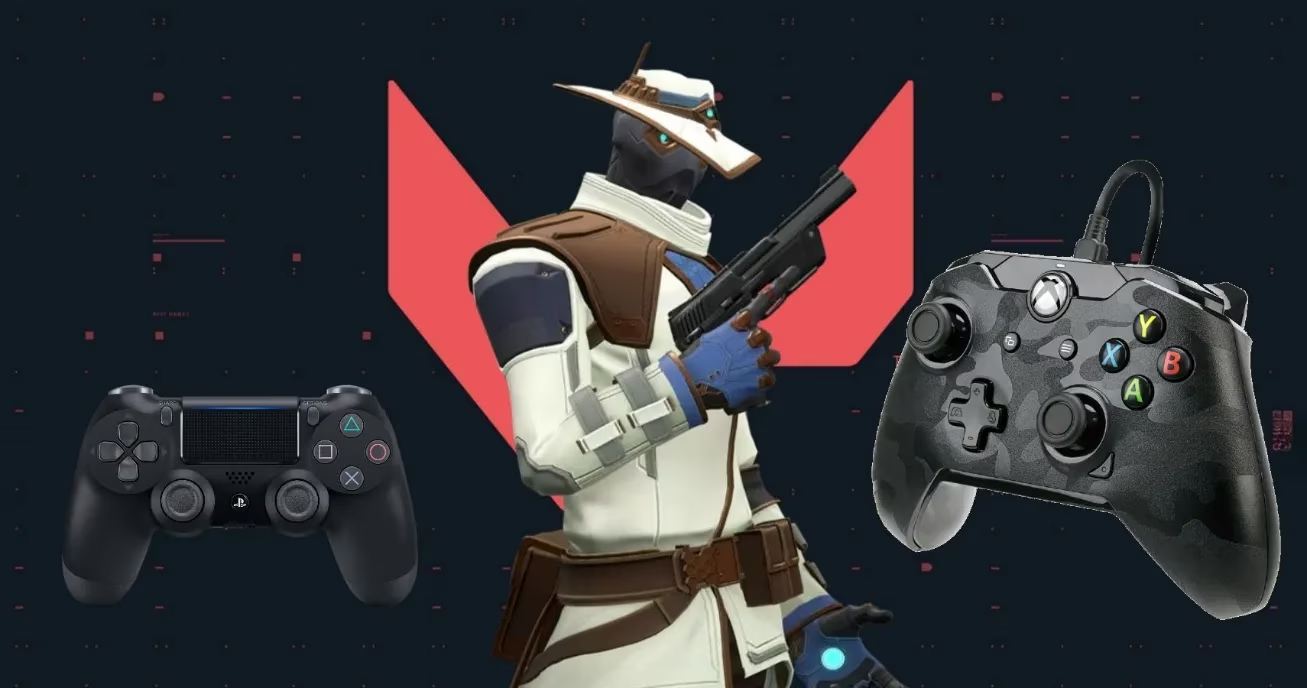
Cast your mind back to April 2020. The tactical shooter was in closed beta, and PC players quickly realized that while the client had some controller support built in, it was about as elegant as a brick through a window. No aim assist, no magnetic crosshairs, no subtle slowdown when sweeping past an enemy’s head. Just raw, unadulterated thumbstick input that felt like asking a goldfish to thread a needle. The developers were upfront: VALORANT is about precision, speed, and rewarding true skill. Giving controllers automatic assistance would water down that razor-sharp identity faster than you can say “eco round.”
Flash forward to 2026, and guess what? That ancient wisdom has been carried over to consoles with surgical precision. Owners of the PS5 and Xbox Series X|S builds of VALORANT have discovered — sometimes painfully — that their beloved gamepad gets zero crutches here. No soft-aim, no bullet bending, not even a pity look from the agent they’re trying to shoot. It’s just your thumbs against the world. The community has even coined a cheeky nickname for the experience: “raw-dogging the trigger.” Honestly, it’s turned into a bit of a meme at this point. But you know what? There’s method in the madness.
When Fortnite’s cross-play era turned aim assist into a cultural battleground, Riot watched and took notes. VALORANT was never going to be another game where controller players and mouse-and-keyboard warriors would argue about who had the artificial upper hand. By keeping the playing field utterly flat across all devices, Riot has preserved a rare purity in competitive gaming. A diamond-ranked player on PC has no advantage over a diamond-ranked console player, because both are forced to rely purely on reaction time, crosshair placement, and muscle memory. No algorithms will save you from a whiffed spray. It sounds harsh, but the result is a community where every clutch moment tastes genuinely earned.
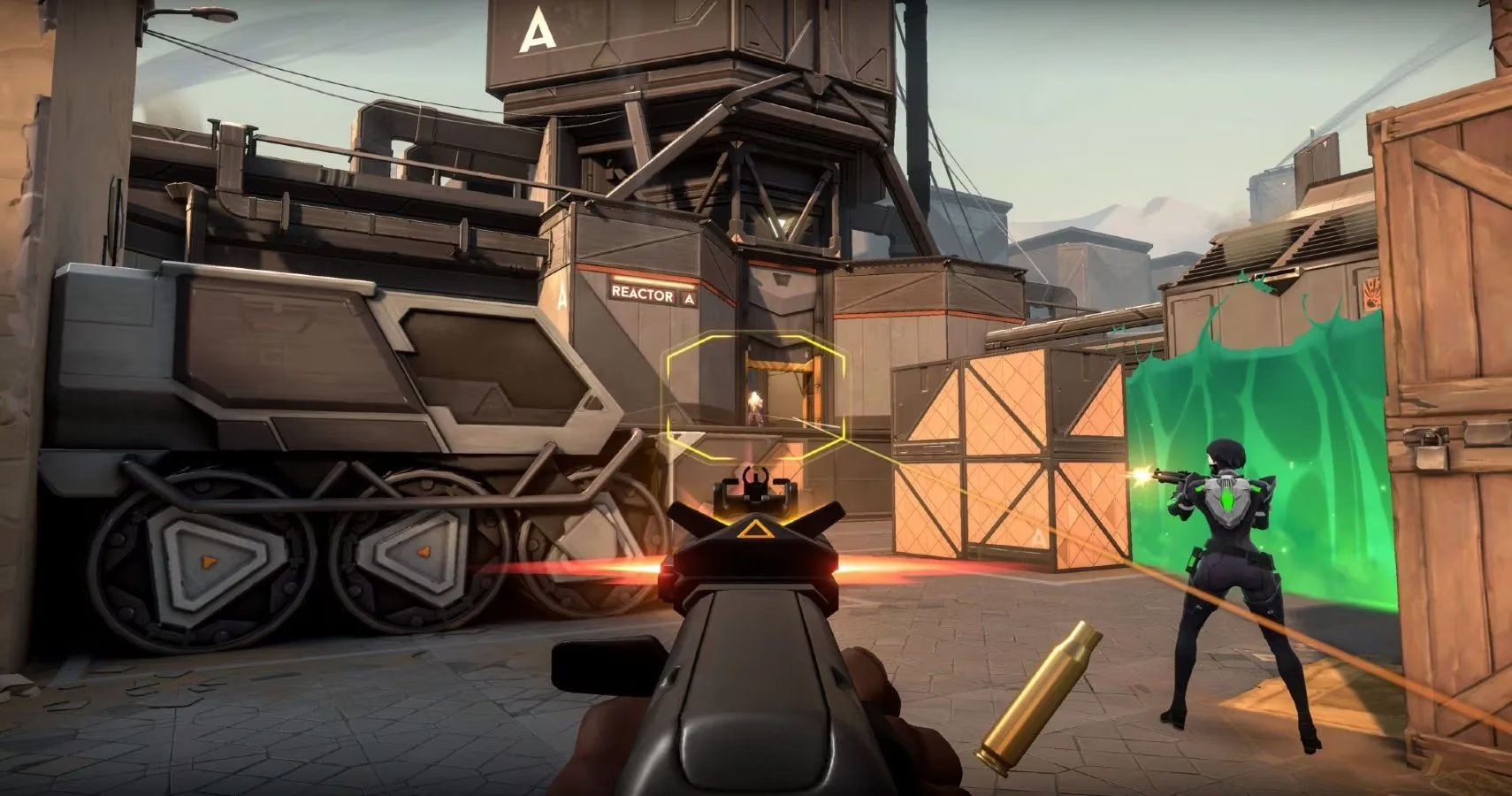
Let’s be real for a second — playing VALORANT with a controller in 2026 is still an uphill battle. Even with official console ports, the in-game settings for controllers remain pretty bare bones. Sure, you can tweak sensitivity curves and dead zones, but there’s no magic algorithm to make those flick-shots happen. Many a brave soul has plugged in their favorite wireless pad, queued up for a competitive match, and then spent the next 30 minutes feeling like they were painting a masterpiece with a broomstick… only to see their rank plummet faster than a Jett updraft. Third-party software like reWASD still exists for the mad lads who want to remap every button and tweak gyro aim until it’s almost, almost comfortable—but that’s a rabbit hole only the dedicated dare explore.
And yet, the controller purist dream stubbornly refuses to die. Every few months, a highlight clip goes viral featuring someone hitting an insane ace using nothing but a gamepad, and the internet briefly loses its collective mind. “See? Controllers can be cracked without aim assist!” the comments roar. But the truth, whispered quietly among esports coaches and ranked grinds alike, is that these moments are the exception that proves the rule. In 2026, the global VALORANT leaderboards are still dominated by mouse and keyboard users, and the top-tier competitive scene highlights exactly zero controller-only prodigies. That hasn’t stopped a small, fiercely passionate community from hosting “no-assist controller tournaments” where players celebrate every kill like a grand final victory.
So why does Riot stick to this seemingly obstinate path? Because identity matters. In a gaming landscape bloated with hand-holding mechanics and accessibility features that sometimes blur the line between skill and software, VALORANT’s refusal to babysit your aim has become its signature strut. It’s the game that says, “You want that Radiant rank? Work for it, no shortcuts.” And in 2026, with a player base still growing at a healthy clip, that message clearly resonates. The console ports have actually attracted a subset of players who crave that old-school, no-nonsense challenge. For them, every Phoenix flash, every Sova dart, every tense post-plant situation feels tenser because they know the win is entirely theirs.
Here’s a quick glance at how the aim-assist debate has shaped up across titles in 2026:
🎮 Game | 🕹️ Aim Assist on Console? | 📈 Competitive Scene Mood
---|---|---
VALORANT | None, zero, zilch | Hardcore purists love it; casuals cry
Apex Legends | Advanced per-optic assist | Constant tweaks and controversy
Call of Duty | Strong rotational assist | Simmering cross-play conflicts
Overwatch 2 | Modest assist with limits | Mixed feelings, mostly stable
Fortnite | Heavily nerfed since 2023 | Still the subject of forum flame wars
The table makes one thing obvious: only VALORANT has the audacity to say “no” without flinching. It’s become a badge of honor for the developers and a litmus test for players. If you can adapt and thrive without digital training wheels, you’re part of an elite club that values sweat over software help.
Looking forward, whispers suggest Riot might experiment with optional gyro controls that still avoid target-detection assist, allowing motion-sensitive players to bridge the gap with pure mechanical tilts. But don’t hold your breath for any auto-aim. A Riot community manager was recently quoted (probably while smirking) saying, “The day we add aim assist is the day Brimstone starts hugging his smokes.” That playful defiance sums up the studio’s attitude perfectly. So whether you’re a PC vet or a console newcomer in 2026, plugging in a controller is less a casual choice and more a statement — you’re ready to embrace the beautiful, brutal fairness of a game that still refuses to hold your hand. And really, isn’t that refreshing?