Back in the distant, pandemic-tinged year of 2020, the gaming world found itself gripped by a collective obsession that had nothing to do with toilet paper or sourdough starters. It was the hunt for a Valorant closed beta key, a digital trinket so coveted that it turned Twitch into a 24/7 campground and transformed casual viewers into desperate code-seeking zombies. Fast forward to 2026, and Valorant has cemented itself as a titan of tactical shooters, complete with a global league, luxury skin collaborations, and a roster of agents that now exceeds a small army. Yet veterans still whisper about the Great Beta Drop Frenzy with a mix of nostalgia and mild PTSD. Thanks to recently unearthed developer notes and a collective memory that refuses to let go, it’s time to revisit the moment Riot Games decided to democratize despair by letting any Valorant stream become a lottery ticket.
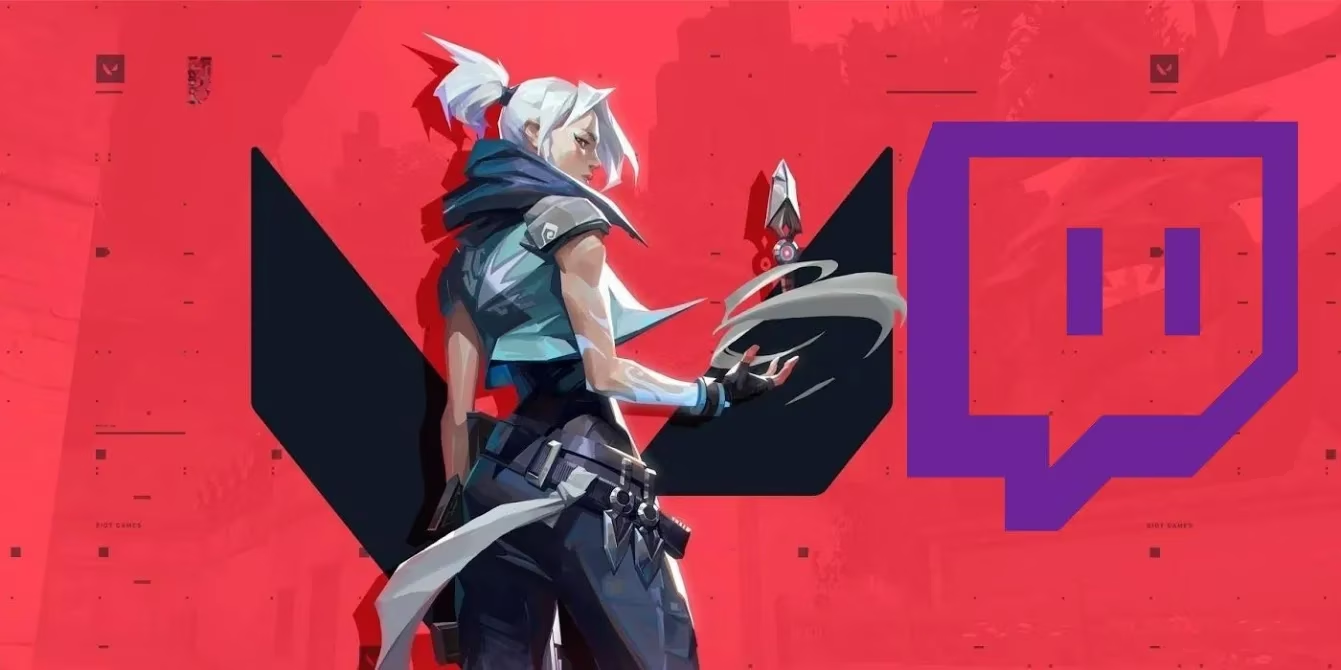
The beta buzz wasn’t just noise; it was a cultural phenomenon. Riot had already mastered the art of the tease, once unveiling the explosive agent Raze during a TimTheTatman broadcast, much to the delight of viewers who realized destruction could come in a pink-haired package. But early access was a walled garden, and the keys were guarded by streaming royalty. Only the most-watched personalities possessed the power to sprinkle beta blessings onto their audiences. Wannabe agents had to pin their hopes on specific channels, refreshing furiously and praying to the algorithm gods. The inequality stung harder than a well-placed Raze Showstopper. Then, in April 2020, Riot dropped a bombshell that sent the community into a tizzy: every Valorant Twitch stream would now be capable of distributing beta codes. In one elegant move, the developer shattered the monopoly while simultaneously turning every man and his dog into a potential key dispenser.
The fine print, however, was a masterclass in giving with one hand and gently slapping with the other. Riot clarified that the total number of drops wouldn’t increase. That’s right—the pie stayed exactly the same size, but now thousands of extra forks were welcome to stab at it. The mathematics of disappointment became exponentially more cruel. Instead of obsessing over a handful of elite streamers, viewers could now spread their hopelessness across the entire Valorant category. The announcement read like a benevolent dictator proclaiming freedom while tightening the rations. Nevertheless, fans rejoiced because it meant theoretically watching a sleepy streamer with twelve viewers had the same mystical drop potential as a 100,000-strong esports star marathon. The RNG gods were now truly blind, and no amount of subbing or donating could sway them.
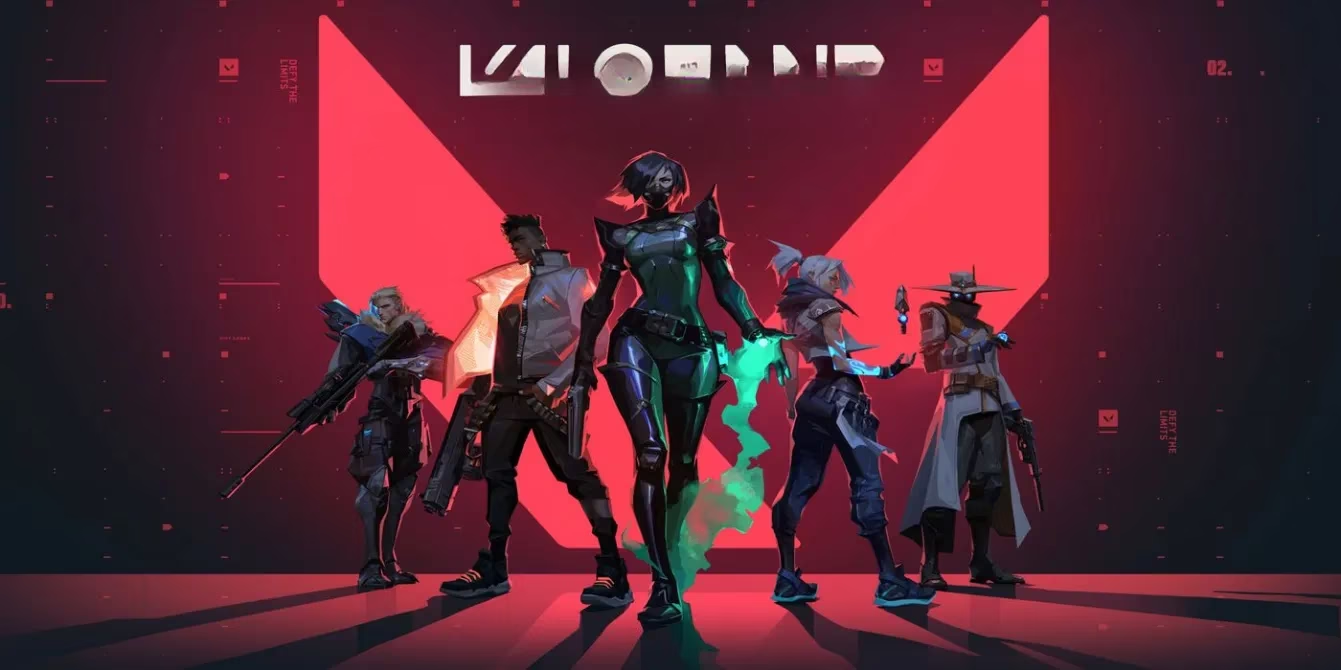
This change also brought a territorial expansion. Riot teased that Brazil, Korea, and Latin America would soon join the beta party, effectively globalizing the hysteria. Servers had already been stretched once to accommodate the clamoring masses, and the developer had manually granted access to thousands more. Whispers of a mobile version (a project that, by 2026, has indeed become a sleek reality with gyro controls and exclusive agent skins) suggested the company genuinely cared about nurturing its embryonic community. But for the code-less masses, the only tangible comfort was the ability to lurk in any stream, marinating in gameplay they couldn’t yet touch. Twitch became a massive, interactive trailer for a product everybody wanted but only a lottery-chosen few could install.
The side effects were pure comedy. Viewership numbers soared into the stratosphere, cementing Valorant’s debut as one of Twitch’s most-watched game launches ever. The chat became a stream of copy-pasted drop rituals: “!drop,” “just got it!”, and the eternal “cap or no cap?” Every streamer, regardless of their skill, was suddenly a potential Santa Claus. Some savvy content creators leaned into the chaos, hosting “dropathon” streams where they napped on camera while viewers gawked at the menu screen, convinced that inactivity increased the blessing. Others crafted elaborate theories about peak drop hours, planetary alignments, and the need to whisper sweet nothings into the Riot launcher. The meta-game evolved from aim training to superstitious viewership, and honestly, it was beautiful.
From a 2026 vantage point, where beta access is now often tied to a simple sign-up or a battle pass purchase, the archaic dance of 2020 feels almost quaint. Yet the legacy lingers. The Twitch drop experiment laid the groundwork for engagement strategies used in subsequent Valorant expansions, from new agent reveals to exclusive in-game charms. It taught the industry that scarcity, when paired with a dash of chaos, could forge an unbreakable bond between game and audience. The closed beta itself became a status symbol, and those who survived the code hunt earned bragging rights that persist in Discord servers to this day. They’ll tell you about the week they lived on energy drinks, watched 80 hours of gameplay without playing a single round, and finally heard the ping of redemption at 3 AM during a streamer’s bathroom break.
So, here’s to the brave souls who turned Twitch into a digital casino floor, to Riot for spinning a supply-chain crisis into a community festival, and to the universal truth that nothing—absolutely nothing—makes a gamer click “Follow” faster than the promise of something they can’t have. Valorant’s servers are now polished, its professional circuit is legendary, and its battle pass rewards are perfectly demure. But for a glittering moment in 2020, the real endgame was just a tiny text pop-up that said: “Access granted.”